Showing posts with label Most Wanted. Show all posts

Thursday, February 15, 2018

Most wanted : Cyprus.

I'm off to Cyrus in April for a week's holiday with my girlfriend Lillian. I'll be doing some fishing whilst there and as it's our first time on the island I've been investigating what species I'm likely to catch. As well as many Mediterranean species that I'm already familiar with there are a few odd looking invaders from the Red Sea that I may encounter. I first heard about two of these because my mate Dimitrios caught them when he fished there last year.

The rather bizarre looking bluespotted cornetfish...
...and the equally weird silver cheeked toadfish.

It's another invasive species however that I've decided to add to my "Most Wanted" target list and it's one that you may recognise because they are a very popular exhibit in many aquariums.

The lionfish. Both beautiful and dangerous, in amongst its long elaborate fins are eighteen venomous spines.
In red above are the spines to avoid. Thirteen in the first dorsal fin, one at the front of each pelvic fin and three at the front of the anal fin.

Most invasive species are not welcome but apparently lionfish are a most unwanted migrant because of the devastation they can cause when they move into a new environment. They have very few predators and can breed quickly, spawning as often as every four days. They are also a voracious predator, eating huge amounts of small fish and crustaceans. All this means they are extremely successful at colonising new territory at the expense of its native species. Over the last few years lionfish seem to have done exactly this along the south west coast of Cyprus which means there's a chance for me to catch one.

If I do catch any lionfish I'll obviously need to handle them extremely carefully and although I usually release the fish I catch I think I'll do my bit to reduce their numbers by keeping any landed, this decision has been made easier by the fact that they supposedly make a very tasty meal. So, I'm really looking forward to visiting Cyprus for the first time and perhaps catching and eating something a little different too.

Tight lines, Scott.

Sunday, August 20, 2017

Most Wanted : Crete revisited.

I've not done a "Most Wanted" post for a while but as I'm returning to Crete at the end of the month for a fortnight's holiday with my partner Lillian I thought it was a good opportunity to look at a few potential targets. As always some ultra light tackle will be going in the suitcase and there a few species I'd love to catch while I'm there that I've never caught before that are already on my "Most Wanted" list. I'll start of with two such species that I've been given some new information on location wise.

Atlantic Stargazer.

A member of the weever family this venomous fish will require careful handling should I be lucky enough to catch one. My mate Andy, who holidays on Crete regularly, has caught a few of these over the years and has kindly told me where he caught them.

Swallowtail Seaperch.

Another species that Andy has caught whilst on Crete. He caught one earlier this year fishing over a reef whilst on a day trip out on a boat . The boat happens to leave from the village we'll be staying in for the second half of our holiday. Hopefully I'll be able to catch one myself.

I've also decided to add a couple of new species to my "Most Wanted" list. Here they are..

Red Scorpionfish.

Another venomous fish. You'd think after being stung by a greater weever whilst on Lanzarote earlier this year might put me off catching poisonous fish?! Wrong! Scorpionfish are awesome and this rather colourful variety is no exception. I think this is another potential capture I can make whilst out on a boat.

Albacore Tuna.

Admittedly I may be pushing my luck with this one. I now know what my "Bonito Basher" is capable of though and my mate Andy has given me a deep water mark to try where he saw juveniles hitting baitfish. I'd love to be able to add a "Tuna Tamer" logo onto my Rock Rover rod too. I might employ a wire trace this time.

I'm really looking forward to this holiday. We love Crete and this will be our third visit to the island. This time we are flying into Chania and will be exploring the western end of the island for the first time. The weather here has generally been poor this year and I've been working a fair bit of overtime at work too so some sun, relaxation and wetting a line in the Mediterranean again will be great. Hopefully I'll catch a few fish, rack up a few species over the two weeks and if I get lucky I'll catch some of the species above.

Tight lines, Scott.

Tuesday, November 10, 2015

Most Wanted : Atlantic Halibut.

Recently I've been watching a few videos on fishing in northern Norway. It looks awesome and whilst massive cod and huge coalfish feature heavily it is an even larger fish that has captured my imagination, the Atlantic halibut.

The Atlantic halibut is the largest flatfish in the world a can reach over an incredible 700lbs in weight!

Whilst they normally swim gracefully close to the bottom, where they feed on other fish and crustaceans, they are also capable of very fast bursts of speed when hunting and have a large cavernous mouth that is full of small sharp teeth.

They have an impressive set of nashers.

It's easy to see why the species has a god like status amongst some Norwegians and seventeenth century poet Petter Dass romanticised about the much revered fish writing: "You loveliest halibut, you queen of the waters.".

Big cutbait shads and pirks worked slowly close to the bottom on the drift seems to be a good way of catching them. My mate Martin has been to Norway several times, enjoying great success targeting halibut using this approach and has put me in touch with someone who organises fishing trips over there.

A happy Martin with a nice big Atlantic halibut.

Atlantic wolfish, already on my "Most Wanted" list, along with torsk and Norway redfish are also possible targets too which also make arranging a trip appealing from a species hunting perspective.

The Norway redfish is normally only found in very deep water. It would be a nice bonus to catch a few. Martin tells me they taste great as well.

I already have next year's holidays all planned out so a trip to Norway will have to wait. Definitely a trip I'm keen to do though although I'll need to get a few more anglers to go as well. Anybody fancy it?

Tight lines, Scott.

Sunday, September 20, 2015

Most Wanted : Tenerife.

Way back in January, feeling quite fed up with the particularly miserable Scottish winter weather, I booked a week long holiday to the Canary Island of Tenerife in December. It's a family holiday with my parter Lillian, my sister Sharon and her partner Julie but as usual my light game travel rod will be going into the case and I will be doing as much fishing as I can get away with. Having fished the Eastern Atlantic before on both Lanzarote and Madeira I now have a reasonable idea what species I'm likely to encounter. Nevertheless the islands in the western half of the Canary Island group do seem to hold a few different species to the ones in its Eastern half.  I had a look through my recently acquired and rather excellent "100 peces de Canarias" pocket guide by Sergio Hanquet to pick out a few species that I'd like to catch. Three have caught my eye. 

Atlantic Trumpetfish.

The Atlantic trumpetfish is a very strange looking fish indeed. I know that other anglers have caught these from deep water close in from both rocks and harbour breakwaters so I think there is a good chance of catching one. Small paddletail lures fished on jigheads seem to be a good choice. 

Glasseye.

A pretty little fish that is found world wide in tropical waters. According to my research they are a shy species that like hiding in amongst rocks and around caves and are most active at night. My headtorch will be going into the case then for some fishing after dark. 

Starry Weever.

Weevers are cool. They taste amazing too. Having sight fished for lesser weevers I know they like lures jigged on the bottom. The disturbance the lure creates when it hits the sand they hide in draws them out and when you lift the lure up they swim up and attack. Metal jigs fitted with an assist hook might be the best approach for these.

Tenerife will be my final holiday abroad this year. As with previous trips I'm setting myself a little species hunting challenge again and this time I've decided on a target of twenty species during the trip including three new ones. I'm really looking forward to returning to the Canary Islands again and getting away from the cold, wet and windy Scottish winter!

Tight lines, Scott.

Wednesday, April 01, 2015

Most Wanted : Freshwater Blenny.

Whilst it's still quite a while away and my mate Martin and I are visiting the River Ebro primarily to target freshwater predators I was curious about what other fish live in the massive Spanish river. All you ever really hear about from an angling perspective is that the Ebro holds huge carp and catfish. When conditions recently have been a bit too miserable to go fishing I've been doing some research into what other freshwater species are found in the river and it turns out that there are lots! Whilst putting together a list of the forty plus species that are found in it I got a pleasant surprise when I discovered that one of them is the freshwater blenny!

Blennies are one of my favourite fish families so I just had to add this one to my "Most Wanted" list.

To be honest I wasn't aware that there were any blenny species that lived exclusively in freshwater but this one does, hence its name! It has a fairly wide distribution too being found throughout southern Europe and northern Africa. It is also a popular fish that is kept in aquariums too. Normally found in fairly shallow water I'll be packing a few floats to fish maggots for them. I was already looking forward to the trip immensely but now I'm even more excited!

Tight lines, Scott.

PS: This isn't an April Fools. 

Wednesday, February 11, 2015

Most Wanted : Nessebar.

As I said in my last post the fishing at the moment is pretty tough going. I've had a few evening bait sessions to try and catch some shore rockling for my Scottish species hunt and I did loose what I'm sure was a decent cod down at North Berwick whilst trying but apart from that I have drawn a blank each time. Matters have been made worse by the unexpected cost of a replacement boiler as well as new tyres and breaks for my car so I am staying local until my finances recover a bit. Frozen canals and course fisheries have also added to my woes. If I said my trip to Madeira at the end of the month could not come soon enough it would be a massive understatement to say the least.

Not getting out as much as I'd like I've also been thinking about my next holiday as well. I'm off to Bulgaria for the first time in June for a relaxing holiday with my partner Lillian. I chose Nessebar to the south of the main Sunny Beach resort as I think it will be a bit quieter there, it looks very nice and the small peninsula where the old town is located looks quite fishy.

The old town of Nessebar looks like it has lots of species hunting potential.

The Black Sea has quite a poor reputation as an angling destination mainly due to overfishing by the commercial fishing fleets of the various nations that surround it leading to a collapse in fish stocks. As I'll mainly just be squeezing in early morning sessions and will happily target mini species I'm not overly fussed by this and I've picked out two species I'd like to catch. I believe both are quite abundant around the breakwaters and rocks so hopefully locating some to target should not be too difficult.

Ocellated Wrasse.

I like wrasse so it makes perfect sense to try and catch a new one while there. The ocellated wrasse is a cousin of our corkwing wrasse and is also a very nice looking little fish with very colourful and distinctive markings on its gill plates and a dark spot on its tail root.

Round Goby.

After doing a bit of research on the goby species found in the Black Sea recently to try and help a friend identify some gobies he'd caught there I've decided to include one. I may well encounter other goby species but the round goby is easy to identify due to the dark spot at the back edge of its first dorsal fin.

At the end of the day my trip to Nessebar is a week away to enjoy Lillian's company but as she's a very tolerant girlfriend I'll no doubt get to fish a few times during the day too. As always I like to set a little species hunting goal and I've decided to try for fifteen species including three new ones. Another trip to look forward to and it's always nice to visit a new place and hopefully do some fun fishing while I'm there plus when I return the fishing here should be a whole lot better!

Tight lines, Scott.

Tuesday, January 06, 2015

Most Wanted : Barbel.

Over the last few years I've had a great time fishing in freshwater all over the UK and in the process have caught many of the species that are found in our rivers, reservoirs, lochs and fisheries. I've barely scratched the surface in terms of techniques, learning just enough to catch my targets in many instances but I've really enjoyed finding out a bit about various freshwater fishing styles and having a go at them along the way. There is one UK freshwater species that I haven't caught however that I am determined to catch this year, the barbel.

Fond of highly oxygenated, fast flowing water this strong streamlined fish uses its four barbels to locate food amongst the stones and gravel on the riverbed.

I could of course head to one of the rivers in England that are famous barbel waters to try and catch one but there are some here in Scotland in the River Clyde. I'd really like to give that a try and whilst I'm not sure how many barbel it holds they do get caught occasionally, most of the time by anglers targeting game species. This makes me think that spending time deliberately targeting them might prove productive. There's only one way to find out!

Tight lines, Scott. 

Thursday, December 18, 2014

Most Wanted : Starry Smoothhound.

I did intend to head down the South West coast of Scotland and have a go at catching this species of shark from the shore this year with my mate Martin but we just never got round to it unfortunately.

Starry smoothhounds come inshore to feed mainly on crabs which is normally the bait anglers targeting them opt to use.

The starry smoothhound is virtually identical to its cousin the common smoothhound except the common smoothhound lacks the "starry" markings on its back. These are variable however and some starry smoothhounds lack these which poses an identification problem because there is no reliable method of distinguishing between the two species in live specimens apart from these white spots.

Spots the difference? Starry top and common bottom (or is it?).

The distribution of both however means that virtually all of the smoothhounds caught in UK waters are almost certainly the starry variety. A good illustration of the very low probability of coming into contact with common smoothhounds is the findings of a recent study into smoothhounds in the North East Atlantic. Over four hundred smoothhounds from around the UK were examined by survey scientists. Initially the sharks were all identified visually with the majority thought to be starry smoothhounds and only ten percent thought to be common smoothhounds. When their DNA was tested however it turned out that every single one of them was in fact a starry smouthhound. Presumably the misidentifications were due to a lack of dorsal spots and if marine biologists can get it wrong what chance has your average angler got?!

Interesting identification issues, species distributions and scientific studies aside, next year I will definitely be heading down to the South West coast of Scotland to have a go for them. I'm not sure if I'll try from the shore or go out in local skipper Spike's boat. Targeting them from afloat offers an opportunity to use lighter tackle and as they are renowned as one of the hardest fighting shark species perhaps this would be a more enjoyable approach to take. Hopefully Martin or some of my other fishing mates will be able to join me.

Tight lines, Scott.

Wednesday, December 10, 2014

Most Wanted : Madeira.

When it was pointed out to me earlier in the year that one of the budget airlines were launching a new route from Edinburgh to Madeira next year I had to have a look once the flights went live and when they did I couldn't believe how cheap they were. I spoke to my mate Lee and after spotting some cheap accomodation we both agreed it was too good to miss out on and booked ourselves up for a week at the beginning of March to escape the miserable UK winter!

As always I like to do bit of research into what species we are likely to encounter and as well getting an another chance to catch some of the species already on my "Most Wanted" I've picked out a few potential targets that I'm going to add to it as well that I'd like to catch. As usual a lot of the fishing we will be doing will be at the ultra light end of the specturm so I'll start with a few of the smaller species. It also goes without saying that no fishing trip abroad would be complete without a spot of exotic blenny hunting so I've indulged my fetish for the cheeky little fish and have included one!

Blacktail Comber.

Having caught common and painted combers I know that as a group of fish when they are in the mood they are super aggressive predators. They usually find small lures slowly worked through their territory most irresistible. I believe these to be fairly common around Madeira so finding a mark that holds some should be my only problem.

Red Banded Seabream.

A close relative of the red porgy (Couch's seabream) they have a very similar shape but a very different colouration having red and silver banding. This is most prominant in juveniles, fades in adult females and almost completely dissapears in adult males. They also have elongated fin rays on their dorsal fin. A very attractive fish indeed. 

Hairy Blenny.

Hairy blennies are found on both sides of the Atlantic and are so named due to the small rows of cirri on the top of their heads. Males (top) and females (bottom) look quite different. Males are smaller and more colourful with a dark body and a red head whilst females are, as is often the case with sexually dimorphic species, fairly bland by comparison. Both sexes have a dark spot on their gill plate that will aid identification should I catch any of them. 

Whilst Lee and I had lots of fun with smaller fish on Menorca some of the most exciting hookups were without question with the bigger, more powerful fish. Lee tells me he's been having a recurring dream about the European barracuda that he lost on Menorca so that will no doubt be pretty high on his agenda as they should be around. We've also been told that there should be a couple of pelagic species inshore when we are there so I have chosen one of them to add as well.

Bluefish.

A powerful pelagic predator with strong jaws and an impressive set of razor sharp teeth. A wire trace will be a must if we target these. Lee was on cloud nine when he landed a greater amberjack and a leerfish in quick succession during our trip to Menorca and I think if he catches one of these he'll be a very happy angler.

After enjoying an excellent fishing trip to Menorca with Lee in October this year I'm really looking forward to another species hunting adventure in foreign waters with him. I've set myself a little species hunting target of twenty five species including five new ones. Fishing in the UK over the next few months can be tough at times where we both live and this trip has given us both something to really look forward to.

Tight lines, Scott.

Friday, November 07, 2014

Most Wanted : Largemouth Bass.

Well it's that time of year again. The nights are getting longer and the weather is getting colder and wetter. Fishing opportunities are become more limited and my thoughts inevitably start to wander a bit to next year. In my head my plans for extended fishing trips during 2015 were already taking shape nicely when my mate Martin decided to throw a spanner in the works. When he told me he was going to the River Ebro in Spain for a week to target freshwater predators using lures and asked me if I wanted to join him I had to have a rethink. After watching a few videos he sent me I was quite frankly blown away, quickly told him that I'd love to go and subsequently the flights, accommodation and guide have all been booked.

Having caught perch and zander in the UK I'm looking forward to hopefully catching some of the larger specimens that the warm water of the River Ebro produces. It is another target however that has captured my imagination, largemouth bass. A fish native to the US, where it is a popular target species for many sport anglers due to it putting up a fair old scrap when hooked, often going airborne in an attempt to get free. It has, like a few other species, been introduced to the River Ebro.

"Take me to the river. Drop me in the water."
Our guide for the duration of our trip is Lee Carpenter of Pro Predator Fishing Adventures. This is Lee with a largemouth bass.

The trip will be my first experience of freshwater fishing abroad and I'm really looking forward to it. Obviously there is also the option of targeting the huge carp and catfish that the Ebro is famous for and being there for a whole week we might also manage to squeeze in a trip to the coast one evening for some ultra light fun in the sea as well. All in all it should be an epic adventure indeed!

Tight lines, Scott

Thursday, August 28, 2014

Most Wanted : Menorca.

With a week long fishing trip to Menorca with my mate Lee in October to look forward to I've been thinking about what I'd like to catch. Four species that are possible targets, flying gurnard, common dolphinfish, streaked gurnard and Atlantic stargazer, are already on my "Most Wanted" list but as it's a hardcore fishing holiday I've decided to add a few more.

The one thing I didn't really do enough of whilst on Crete last year or have much success with whilst on Lanzatote in May was fishing hard lures or metals to try and catch some powerful, hard fighting fish that will really test my tackle. Whilst I still plan to have lots of ultra light fun I really want to catch some bigger, faster, more powerful fish from the Mediterranean when I visit the Spanish Balearic Islands for the first time. With this in mind here are a couple of potential targets that would fit the bill nicely.

Greater Amberjack.

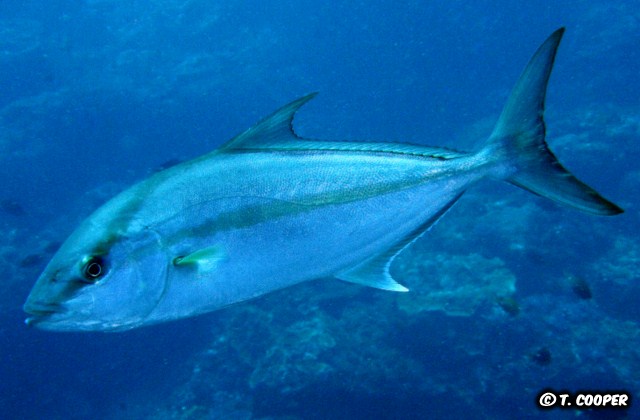
A golden stripe down its flank and a dark line across the top of the head make it quite distinctive.

Leerfish

Big and aggressive. A very distinctive lateral line makes it fairly easy to identify. Line being stripped from your reel is another giveaway!

As I've already said however I'll still be targeting mini species on ultra light tackle as well and I thought I'd add one to my "Most Wanted" list as well. It's a member of one of my favourite groups of fish, blennies. Not another blenny I hear you say! Well if you didn't realise already I have a bit of a soft spot for them and this may just be the coolest looking one I've added to my "Most Wanted" list so far!

Peacock Blenny.

Males (top) and females (bottom) look slightly different. Males are deeper bodied, have a crest on their heads and have deeper fins. Both sexes have a similar colouration with rather striking electric blue markings.

I can't really describe how much I'm looking forward to this trip. Lee's a good friend and I really enjoy fishing with him. I'm sure it will be an epic, action packed week and we'll no doubt catch a lot of fish. I've set myself a target of thirty species including ten new ones.

Tight lines, Scott.

Wednesday, August 13, 2014

Most Wanted : Zakynthos.

I'm off to Zakynthos for a week at the end of this month for what will be first and foremost a relaxing trip spending quality time with my girlfriend Lillian. On the fishing trips front I get away with murder really and she puts up with no end of my fishing related shenanigans so I shall do my best to limit my fishing sessions to sneaking off early in the mornings when she is asleep and if I'm lucky I can perhaps squeeze in an additional one or two very short sessions if I am given permission. I am also not going to add any new species to my "Most Wanted" list for this holiday. There are however a few species already on my "Most Wanted" list that I may encounter.

Atlantic Stargazer.

My mate Andy has caught a few of these now whilst on holiday on Crete. Surely there must be some hiding in the sandy seabeds around Zakynthos?

Common Dolphinfish (Mahi-Mahi).

I saw some of these cruising past a harbour when I was on Crete last year. I'll try for them early in the morning using small metals or soft plastics fished in conjunction with a caro. Should be fun if I hook one on my ultra light travel setup!

Flying Gurnard.

Like the stargazer these will most likely be found over fine sandy areas. The rocky peninsula I'll be fishing from every day looks like it has some of those around it.

Streaked Gurnard.

The only fish of the five featured that can also be caught around UK waters, the colourful streaked gurnard will hopefully be more common in the Mediterranean.

Tentacled Blenny.

I have no doubt that a few species of blenny and goby will be amongst the fish I catch. I'd really love to catch one of these funky little fellows though.

So, whilst I may be limiting my fishing time, I'm still confident that using the techniques I employed on Crete and Lanzarote as well as trying a few others I can still rack up a few species. Hopefully I can catch some of the species above and as a bit of fun I have set myself a goal of catching twenty species including five new ones.

Tight lines, Scott.

Friday, July 04, 2014

Most Wanted : Tadpole Fish (Lesser Forkbeard).

I recently read some reports on the World Sea Fishing Forum of tadpole fish being caught from Peterhead Breakwater. Loch Leven also seems to be a venue where every now and then one gets caught. They are a pretty weird looking fish and I'd really like to catch one. My friend Ross has caught one three years running from the same spot on Anglesey. This tells a species hunting nut like me that if you know where they have been caught in the past you can realistically go there and deliberately target them.

Ross with a fine example of the aptly named fish.

I believe that these fish only come inshore at certain times of the year to breed before going back out to deeper water again. I've spoken to Ross and he has caught all of his at the same time every year so this will give me something to target early next year and who knows, perhaps I can persuade Ross to return from Alderney and take me to his favourite tadpole fish mark?

Tight lines, Scott.

Tuesday, May 27, 2014

Most Wanted : Redlip Blenny.

Whilst fishing on my recent holiday to the Canary Island of Lanzarote I spotted through the crystal clear water a rather big chunky blenny sitting on a rock on the bottom. I tried to catch it but despite a concerted effort I failed to do so. It was a bit of a brute, was very dark and had a red tinge to its pectoral fins. Some research when I got home has led me to believe that the fish in question was a redlip blenny.

Playing hard to get with those sexy red lips certainly got my attention.
It would seem that the redlip blenny can adopt a mottled colouration too.

Having caught and released a couple of my "Most Wanted" targets while there I need to add a couple more and the redlip blenny is going to be the first. Its stubborn refusal to take a Gulp! Angleworm had me perplexed and I've decided that I want to catch one. Perhaps a different lure or presentation would fool this seemingly fussy blenny or maybe some bait would be required to tempt one? Of course in order to find out I'll have to return to the Canary Islands and I'm considering a visit during winter early next year. Whichever island I visit I've no doubt it'll provide some species hunting adventures I can look forward to.

Tight lines, Scott.

Friday, May 02, 2014

Most Wanted : True Crucian.

It seems true crucian are becoming rarer and rarer these days with the parentage of some "crucian" that are caught being subject to doubt. This is due to the fact that they breed quite easily with other cyprinids producing hybrids. This will happen wherever crucians are found along side other carp species and most commercial fisheries aren't too fussy about this. For match purposes bag weights are all that matters and the sometimes questionable genetics of the fish being caught isn't of concern to the anglers competitively filling their keep nets. To muddy the waters further, brown goldfish and F1 carp can sometimes be mistaken for crucian. All of this makes finding photographs of a true crucian a bit tricky so rather than take the risk of including a picture of anything less than a 100% pure crucian I've decided to use a wonderful old drawing to illustrate an example of the species.

The crucian. A rather handsome fish I'm sure you'd agree.

With a few questionable pretenders swimming around how can an angler be sure his crucian is indeed a crucian without going to the length of having DNA testing carried out on a sample scale? Crucian's shape and colour can vary but there are a few key identifying features that can be looked for. They have no barbules. The dorsal fin is large and convex. The caudal fin is almost straight edged when extended vertically. Scale counts can be performed. I guess most pleasure anglers would be happy to call it a crucian if it looked like one but knowing for sure matters to us species hunters, well it does to this one anyway!

To make things easy for fussy folk like myself there are a few carp free fisheries who pride themselves in the purity of their crucian stock and go to great lengths to protect it. To help ensure I catch a bonafide crucian I've decided to pay a visit later this year to one such fishery, Marsh Farm in Surrey. Considered by many as specimen crucian mecca, I'd be happy to catch one of any size!

Tight lines, Scott.

Sunday, February 09, 2014

Most Wanted : Bitterling.

I recently purchased a copy of Mark Everard's rather excellent "The Little Book of Little Fishes" to further my research into the various mini species that can be found in UK freshwater. As well as the usual more familiar fish species like minnow, stickleback and gudgeon it covers some species that are less well known, some that are distributed in localised areas and also some non native species too that have been introduced to the UK from elsewhere. Of course, my favourite little spiky brown fish, the ruffe, is an example of all three. Another is the bitterling. Released from aquarium stock in the North West of England they seem to have found a niche for themselves and can still be found around the region. They are pretty little fish with the males taking on rather impressive colours during their mating season.

A male bitterling displaying some rather nice breeding colours. 

Bitterling have a very interesting relationship with freshwater mussels and the breeding cycle of the bitterling is in fact reliant on them. The female injects her eggs inside the shellfish and the males sperm then enters the mussel as it filters water in to breath. A very odd process indeed and one of those strange things that occur in nature that make you wonder how such things come about.

A female bitterling. Note the long egg tube (ovipositor) in front of the fishes anal fin that is used to deposit eggs inside the mussel.

Growing to an average size of only 5-7cm and with a small upturned mouth some very sensitive wagglers will no doubt be required as well as small hooks and probably a pint of pinkies or squats if I'm to successfully target and catch them. I have a couple of small stillwater venues in England in mind that rumour has it contains bitterling and I will hopefully get a chance to have a go for them later in the year.

Tight lines, Scott.

Thursday, February 06, 2014

Most Wanted : Lanzarote.

With a week long holiday booked on the Spanish island of Lanzarote in May it goes without saying that some fishing gear will be going with me. I'm looking forward to a spot of foreign species hunting and I've been having a look at what weird and wonderful species I can hope to catch from the warm waters of the Eastern Atlantic that surrounds the island. As well as some of the fish I learned about and caught from the Mediteranean Sea last year being resident, there are other interesting species too. Here is a trio that have caught my eye that I'd really love to catch.

Barred Hogfish

A very colourful member of the wrasse family. Did I mention I love wrasse? Would be rude not to try and catch some new ones whilst there!

Swallowtail Seaperch

Another very colourful species with quite a large mouth. A rather cool name too. I'd love to catch one!

Macaronesian Sharpnose Puffer

Pufferfish are pretty cool. I know these can be caught off the rocks at the back of Puerto del Carmen harbour so will be having a go for them.

Picking three from such a wide variety of species was quite hard and regardless of what I end up catching I'm sure I'll have a great time. I'm really looking forward to fishing somewhere new again and whilst it's a family holiday and short fun sessions will be the name of the game I have set myself the little challenge of catching twenty five species whilst there including ten new ones.

Tight lines, Scott.

Monday, January 20, 2014

Most Wanted : Norwegian Topknot.

Growing to only 12cm, the Norwegian topknot is the smallest of the three UK species of topknot. The common topknot and Ekstrom's topknot being the other two. Unlike the common topknot which clings to harbour walls, upside down under boulders and in recesses in reefs and wrecks, the Norwegian topknot uses its ability to change colour to hide. It can change its markings into a variety of colours from drab browns to brilliant reds and pinks. It uses this ability to camouflage itself against a wide range of different background surfaces from sand to rock and algae.

This Norwegian Topknot has just moved making it stand out.

In shape it is much more elliptical than both the common and Eckstrom's topknot and it has relatively large and well defined scales. I should have little problem with identification should I manage to catch one. According to divers there seem to be quite a lot of them around St Abbs Head so I'll be down there trying to catch one this year. 

Tight lines, Scott.

Tuesday, January 07, 2014

Most Wanted : Blackbelly Rosefish (Bluemouth).

What a cool name! This poisonous member of the scorpion fish family is found, amongst other places, in the deep waters several miles off the south west coast of Ireland so catching one is an excuse for another trip!

Sulking in the depths.

Also known as bluemouth because, you've probably guessed it, the inside of their mouths is a shade of blue. Scorpionfish are one of my favourite families of species so taking all of the above into consideration I have to add the blackbelly rosefish to my "Most Wanted" list.

Tight lines, Scott.