Showing posts with label Grey Gurnard. Show all posts

Thursday, July 31, 2025

In sickness and in health.

Despite not feeling great, I took a short trip over to the Isle of Bute recently. Two of Lillian’s friends were getting married in a short ceremony at the island’s registry office in Rothesay, and had asked her to attend as one of the witnesses. It was to be a quick, informal ceremony, but as I didn’t really know them, it somehow didn’t really feel quite appropriate that I attend, so I went fishing in the afternoon and met up with them in the evening for a meal. I wanted a nice easy venue to fish, so after having a look on Google Maps, I decided to head to Port Bannatyne’s marina, to fish from the outside of its breakwater. 

My spot for the day. 

Starting off fishing close in, I quickly discovered there were quite a lot of poor cod just out from the base of the breakwater’s rocks. Dropping in tight on the rocks themselves produced a few goldsinny wrasse, followed by a ballan wrasse that tried its best to get down into the rocks. 

I’m not a big fan of poor cod if I’m honest. 
Goldsinny wrasse can be a bit of a pain too. Often present in large numbers, they’re very aggressive, making catching other species more difficult. 
Even small ballan wrasse are great fun on ultra light gear. 

After a while, I decided to try fishing further out and switched to a three hook flapper equipped with very small hooks, in the hope of catching some interesting mini species, or perhaps even something new! This change of tactics produced fewer fish, but the variety was good which kept things interesting as I didn’t know what I would catch next!

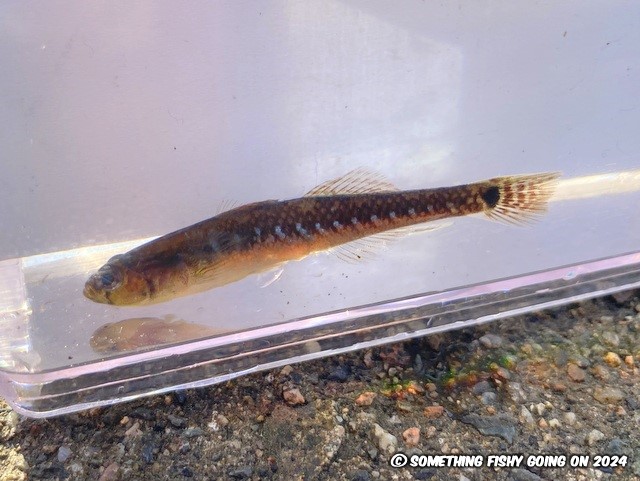
I caught my first common dragonet of the year,..
…a small dab,..
..a tiny haddock, again my first of the year,… 
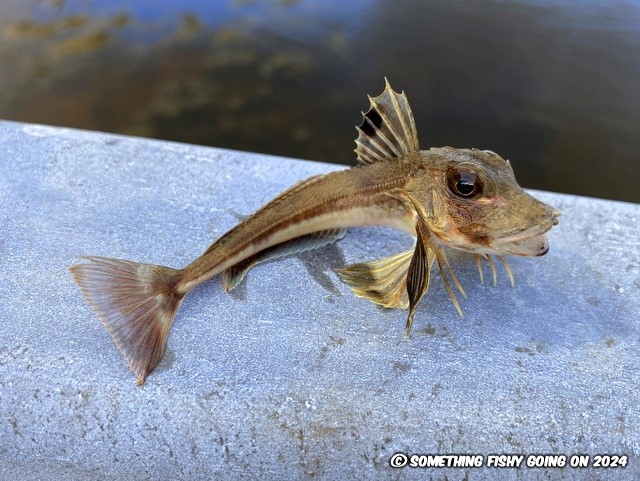
…and quite a few juvenile grey gurnard.  

Before the end of the session, I had a few casts with a 10g metal jig. This produced a few mackerel at distance and several pollock closer in. It had turned out to be quite a productive mark and I’d quite enjoyed fishing there. By the time I left however, fatigue had started to set in, which isn’t normal given I’d not been fishing that long. As Ive mentioned in most of my recent posts, I’ve not been feeling right for quite a while now. A load of blood tests have been done recenty and the results have all come back normal. This is good news obviously and another appointment with the doctor has been scheduled, so hopefully we can try to get to the bottom of what exactly is the matter with me!

Tight lines, Scott. 

Sunday, July 27, 2025

Stuck in a rut.

Since returning from the Isle of Lewis at the end of May, I haven't been feeling very good. In fact, my symptoms have probably gotten worse: Constantly feeling fatigued, and having aching arms and legs isn’t much fun. As a result, I’ve been out fishing less than I normally would over the start of the summer months, usually choosing to stay fairly local when I have ventured out. A trip down to Torness Power Station midway through June didn’t produce that many fish, but a few leopard spotted goby and a butterfish were in amongst those I managed to catch, bringing a smile to my face. 

If pushed, I’d probably say that the leopard spotted goby is the coolest of all the UK goby species.
Butterfish are cool, and it's always fun to catch them!

Before heading back up the road, I quickly visited the sea defence boulders around at the station’s hot water outlet. My objective there, was to catch my first common blenny of the year. It didn't take long at all!

This shanny eagerly munched a small piece of prawn. 

Later in June, I also met up with a young American species hunter named Dominik, who was in Edinburgh for a few days before he and his family headed north on a Scottish road trip. We spent a few hours fishing beneath the lighthouse at Newhaven Harbour. It was a very productive session, during which, Dominik added a few new species to his lifelist, including butterfish, which we caught lots of. In amongst the more common species found there, all of which were new to Dominik, we also caught about a dozen grey gurnard, and towards the end of the session, I caught my first viviparous blenny of the year.

Dominik’s first ever butterfish. One of seven we caught between the two of us!
We also caught lots of juvenile grey gurnard.
My first viviparous blenny of the year. Another mini species I really enjoy catching!

So, I only went fishing a couple of times in June, but on both occasions, whilst the sessions may have been fairly short, they were very enjoyable! I might not have been feeling great, but getting out had cheered me a bit. I really enjoyed meeting up with Dominik and helping another species hunter successfully catch a few new species is always very satisfying.

Tight lines, Scott.

Thursday, September 19, 2024

Returning the favour.

Now and then, a fellow angler who has found this blog, or my Instagram account, gets in touch looking for more detailed information on some of the fishing spots I post about or to ask me where I would recommend they go to catch a certain species. I’ve been helped many times over the years by other anglers who have been very generous with their advice and knowledge, so I like to do the same whenever I can. Species hunter Ben contacted me last year about haddock fishing off the north coast of Scotland, and we’ve kept in touch ever since. When he told me he and a friend were coming up to Scotland from Pembrokeshire for a few days and had based some of their mark choices on my blog posts, I decided to go and meet up with them. The weather was pretty terrible while he was up here with his friend Nev, but their final day trip to Lochaline saw a slight improvement in the conditions and I got up early to make the long drive up there to fish with them. Four hours later, I arrived at the first spot. 

Logs on the logging pier in Lochaline. I found two species hunters fishing behind them in the corner. 

When I joined them, they were each had a mackerel bait out in the incredibly deep water directly in front of the pier and were fishing for mini species down the side of the pier with ragworm baited sabiki rigs while they waited for bites on their heavier gear. Both of them are taking part in species hunting competitions and were up in Scotland hoping to add to their already very impressive totals. Ben’s main target for the session was a spurdog, whilst Nev was hoping to catch a leopard spotted goby. I fished small pieces of ragworm down the side of the pier, keen to catch a quintet of UK wrasse species. I managed four of the five quite quickly, but a cuckoo wrasse proved elusive, and I didn’t catch one until later on in the day, completing the set. 

With their lovely pastel shades markings, rock cook or small mouthed wrasse were present in large numbers.
I caught lots of them in Norway recently, but this was my first Scottish cuckoo wrasse of the year.
My four hundred and fifty seventh* goldsinny wrasse of the year! *Estimated, but it feels like I've caught that many. This particular specimen had lovely golden markings on it.

While I was fishing away, chatting to Ben and Nev about fishing, species hunting and various fish species we’d all caught over the years, they both added a couple of species to their competition tallies. Ben caught a coalfish and shortly afterwards a small spurdog, and Nev caught a Connemara clingfish followed later on by a leopard spotted goby. Later in the afternoon we decided to change venue and headed around to the stone pier near the ferry terminal in the village. From this spot, Nev wanted to target a couple of small goby species and Ben was keen to try for a sea trout. Whilst Ben fished metals, Nev and I baited tanago hooks with tiny pieces of ragworm and caught a few painted goby and two spotted goby with relative ease. 

I’m not taking part in any species hunting competitions, but it was still nice to get another species ticked off for 2024 with this two spotted goby.

Having quickly caught our two target goby species, we headed further north up the shoreline, passing Europe’s only underground sand mining facility, to reach the village’s small marina. Nev and I targeted tiny fish with tanago hooks whilst Ben continued casting metals around hoping to tempt a sea trout. 

Ben fishes from the marina pontoons with small metals, hoping to catch a sea trout.

It didn’t take any of us long to catch fish. Nev and I very quickly pulled out several sand goby, whilst Ben began to supply some of the marina’s boat owners with freshly caught mackerel. 

One of several sand goby that we caught. 

Nev was over the moon to catch a sand goby as it was another addition to his competition tally. We carried on searching the sandy bottom and caught a few more species. There were lots of tiny poor cod around, and I also caught a couple of tiny grey gurnard.  

Perfection in miniature and incredibly adorable into the bargain!

The last time I visited this spot I thought I saw one of the UK’s two smaller clingfish species, so I was scanning the bottom trying to spot one of those. When I saw a small dark fish sitting motionless, I spent some time trying to catch it. It didn’t seem interested at first, moving around a few centimetres at a time before settling in a new position. Borrowing a bright pink cheburashka weight from Nev I was able to more accurately lower a tiny piece of ragworm right in front of the fish and after a while it took the hook into its mouth. Quickly lifting the fish up, I was slightly disappointed to discover it was in fact a tiny short spined sea scorpion. 

My first of the year, but not the species I thought I’d been trying to catch!

Ben had come over to see what we’d been catching before returning to the pontoons to target sea trout again. Just before we all called it a day, Nev managed to catch a juvenile short spined sea scorpion too, which was also an addition to his species hunt tally. By this point, light was beginning to fade, and we called it a day. With a ferry to catch as well as an overnight closure of the road through Glencoe and a detour increasing my journey time home, I said farewell to Ben and Nev and hit the road. It was great meeting up with them both, and I wish them success with their future species hunting. I might not be too long until Ben and I meet up again for another spot of species hunting, he’s invited me down to Pembrokeshire to try and catch my first ever UK grey triggerfish. Fingers crossed the right conditions for them materialise! 

Tight lines, Scott.

Friday, September 13, 2024

Species hunting adventures in Norway.

At the end of August I flew out to Oslo Gardermoen Airport with two of my mates, Nick and Ryan, for a week long fishing holiday staying in a Hustadnes Fjordhytter wooden cabin. Located right next to Hjørundfjorden, and surrounded by the stunning Sunnmøre Alps, a range of breathtaking mountains rising steeply up to 1700 metres from the fjord on all sides, providing stunning vistas in all directions. Landing in the afternoon, we picked up our hire car and made the seven hour drive north. The last few hours of the drive took us through some stunning scenery. Emerging from a tunnel, we stopped to stretch our legs and took in this stunning view.

A small picturesque village nestled in a Norwegian valley

By the time we arrived at the cabin and met our host Anders, it was dark, so we got our gear into the cabin and were quickly shown the boat we had hired for the duration of our stay. Up early the following morning, the view across the fjord from our cabin window was awe inspiring, even if the weather forecast for the next few days was not.

Imposing mountains surround the fjord.

Grabbing our boat fishing tackle, we headed around to the tiny harbour and motored out into the bay, where we set about catching some mackerel to use as bait. Catching some was fairly straight forward, and we soon had enough to start fishing for other species in the area. Beginning our species hunting in relatively shallow areas, we were soon catching lots of lovely grey gurnard on strips of mackerel fished close to the bottom.

We all caught plenty of nice grey gurnard. They are so spiky!

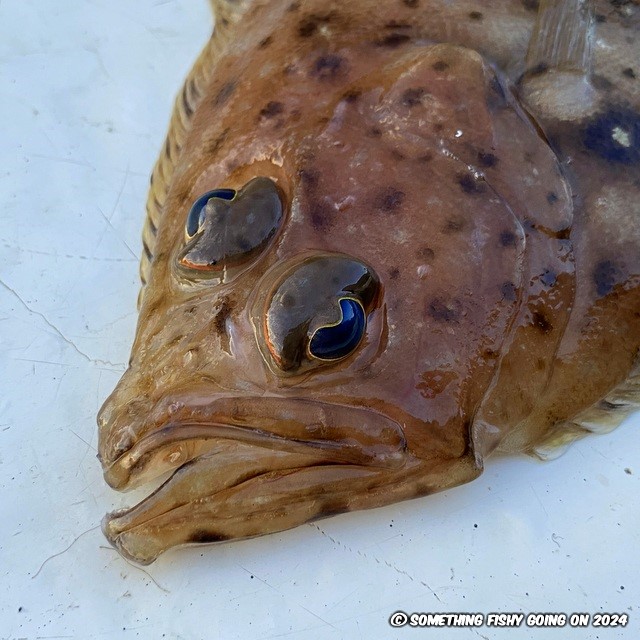
The real target was megrim, a flatfish with a very large, cavernous mouth, and Nick managed to catch one pretty quickly. The grey gurnard were present in large numbers however, and catching anything else proved quite difficult. After a while, I caught a cuckoo wrasse when we drifted closer to shore over some mixed ground.

A nice female cuckoo wrasse.

In the afternoon, we headed across the fjord to fish in the shadow of a particularly massive and very steep lump of rock that had a waterfall running down it. The ground close in was pretty rocky and our first few drops produced some big whiting and some coalfish that hit our baits as we dropped them to the bottom. These were followed by a few cusk caught from some rougher ground.

My first new species of the trip. All three of us caught a few of them.
We call them cusk or torsk in the UK. They can be caught in the Shetland Islands. The Norwegian for cod is also torsk, so things can become slightly confusing. Its scientific name is Bromse bromse. The Norwegian name for this species is bromse. Hope that's cleared that up?!

Drifting along a little further out in deeper water, we all began catching small Norway haddock. A second new species of the trip for us all.

The Norway Haddock or redfish. Not related to the haddock from the cod family, this fish is a rockfish. By the end of the trip we'd all caught a lot of these brightly coloured bottom dwellers.

The following day, we continued our search for megrim in the bay to the west of the cabin. Fishing close to the clean bottom, in different areas, at various depths, I was quite surprised when I lifted into a bite and pulled up a small hake! I knew they were a potential catch but was expecting to catch them in much deeper water. This was followed shortly afterwards by my first megrim of the trip. A great start to the day's fishing! Four new species in my first two days boat fishing was a fantastic start to my trip.

My third new species of the trip! This long, streamlined member of the cod family possesses a large mouth full of small razor sharp teeth and also has an impressive set of large fins.
My first ever megrim, a flatfish species I was hoping to catch, so I was pleased to get one on day two.

As the day progressed, we carried on exploring the bay out in front of Sæbø. Over some mixed ground we caught a few small ling and our first haddock of the trip. Ryan also caught a blackbelly rosefish, also known as a bluemouth.

My first ling of 2024.
My first haddock of the year too.
I was quite jealous of Ryan's blackbelly rosefish, but at least we knew where we could potentially catch more.

That evening after dinner, we messed about outside the cabin with ultralight tackle and caught tons of wrasse. There was a huge amount present, we caught a few ballan, corkwing and cuckoo wrasse, but the most abundant were definitely goldsinny wrasse, attacking our small pieces of Isome aggressively. Through the crystal clear water, I was positive I could also see a few rock cook wrasse as well. I tried hard to pull one out from amongst the hordes of other wrasse to complete the set, but didn’t manage to get one.

Due to my determination to catch a rock cook wrasse, I probably ended up catching more goldsinny wrasse than any other species during the trip! Slightly ironic, given it's certainly my most caught species back home this year too!

The following two days the weather forecast was pretty poor with lots of rain forecast. Wearing our waterproof clothing, we went out in the boat anyway. There ended up being lots of showers, but we avoided the heavy rain that was predicted. As well as visiting areas we’d already tried, we also spent some time fishing bigger baits in deeper water to see if we could catch long nosed skate. This produced a nice hake for Nick. Ryan and I both caught a black mouthed dogfish. I say caught, but both were merely holding onto our baits all the way up through about a hundred and fifty metres of water, only deciding to let go once we lifted them into the boat.

A nice hake for Nick from deep water.
Black mouthed dogfish. Not the smartest shark in the ocean but a very cool one.

In the evening the worst of the rain fell so we chilled out in the cabin and had a few beers. In between a couple of downpours, Ryan heard some splashing outside and looking out of the cabin window spotted several groups of pilot whales slowly making their way up the fjord. It was an incredible sight, and Nick ran outside with his camera to get some photos.

Pilot whales passing by.

The following day more heavy rain was forecast, so we headed out again suitably dressed. In the morning, we really struggled to get locate any mackerel. Maybe the arrival of the whales had something to do with it, I speculated. After three hours, we had only caught two mackerel between the three of us! Nick decided he fancied a hike in the afternoon, so Ryan and I dropped him off, and we went back out to drift over the spot where he'd caught the blackbelly rosefish two days previously. We didn't get any, but after a while we started catching a few fish out in deeper water, but no species we hadn't caught already.

A nice whiting for Ryan.

Tired of making our own food, in the evening we drove up through the valley to Ørsta for some pizza. We did intend to fish there, but it was very windy, quite cold as a result, and we weren't suitably dressed, so we decided to head back to Sæbø to fish there instead where it was much more sheltered. Dropping scented lures down the harbour walls, the results were quick predictable, wrasse, lots of wrasse. The water was so clear we were able to do a bit of sight fishing, trying to target specific fish, which was fun. All three of us caught plenty of wrasse, and in amongst them, I caught an absolutley stunning male cuckoo wrasse.

Sæbø's Harbour and ferry port. The perfect venue for some ultra light fun.
Possibly the most incredibly brightly coloured male cuckoo wrasse I've ever caught!

After a while, we went for a wander along to the marina in front of the Sagafjord Hotel. More wrasse were caught, and we added a couple of mini species to our trip tally in the shape of a long spined sea scorpion and a black goby. Before too long it got dark and we returned to the ferry port where we spent some time looking for topknot using our headtorches. Sadly, the topknot in Norway proved just as elusive as the Scottish ones!

Ryan fishes in amongst the rocks and bladderwrack.
There were probably lots of black goby around, they were just being beaten to my Angleworm by the resident wrasse.

During our last two days afloat on the fjord, we were treated to some glorious weather. We really struggled to find mackerel though, and once we did, we generally found the fishing to be much more difficult, catching less fish than we had during the first few days of the trip, and nothing new species wise.

Not a cloud in sight.

As we fished away, we were treated to a second, much closer encounter with a pod of pilot whales when they swam by the boat, and we were also visited by a white tailed sea eagle which was also fantastic to see up close. Nick had his camera out on the boat with him and got some great photos.

Pilot whales pass the boat.
Bird of prey.
Flying high.

We spent a reasonable amount of time over the last two days dropping bigger baits in deep water trying to tempt a long nose skate, but this only resulted in a few more very greedy black mouthed dogfish being caught. Our last hour or so of fishing was spent drifting over much shallower areas. Nick and Ryan spent some time fishing jigs, whilst I stuck to fishing strips of mackerel close to the bottom. A few ling, cusk and whiting were caught. While Nick and Ryan declared their fishing was over and tidied up the deck, I had one last drop with the last of the bait and caught the final fish of the trip in the shape of a megrim.

I think I caught five of these big gobbed flatfish over the trip. Nick and Ryan caught some too. I wish topknot back home were so easy to catch!

Light was fading by the time we got back in to the harbour. Our species hunt was over and overall, despite the mixed weather and fishing, it had been a most enjoyable trip. Between the three of us, we’d caught twenty one species. I was slightly disappointed not to catch either a blackbelly rosefish or a long nosed skate, but was happy I’d caught four new species during the trip, highlighted in bold in our trip tally below.

  1. Ballan Wrasse
  2. Blackbelly Rosefish/Bluemouth*
  3. Black Goby
  4. Black Mouthed Dogfish
  5. Coalfish
  6. Corkwing Wrasse
  7. Cuckoo Wrasse
  8. Cusk/Torsk
  9. Golsinnny Wrasse
  10. Grey Gurnard
  11. Haddock
  12. Hake
  13. Ling
  14. Long Spined Sea Scorpion
  15. Mackerel
  16. Megrim
  17. Norway Haddock/Redfish
  18. Pollock
  19. Poor Cod
  20. Pouting
  21. Whiting

*would have been a new species for me, but I failed to catch one sadly.

I'd like to return to Hustadnes Fjordhytter, it’s a stunning place and a feel like we’ve barely scratched the surface. Perhaps it would be more apt to say we barely scratched the bottom. The fjord is 400m deep in places, and there are all sorts of unusual species down there that I’d love to have a go at catching. A trip to northern Norway to target wolfish and halibut is on the bucket list too!

Tight lines, Scott.

Monday, March 06, 2023

A cracking trip.

I headed to the west coast for a few days of species hunting last week. I was joined by my mates Ryan and Ben, and we based ourselves in Oban. After checking in to our accommodation late on Monday afternoon, we hit the road again and headed south. For our first session, we fished into very deep water from a rock mark on the island of Seil. After scrambling around the rocks below some cliffs, we got comfortable in our chosen spot, set up our gear and waited patiently for bites. Fishing at close range into rough ground, one hook paternoster rigs were the order of the day, incorporating a rotten bottom link to our leads. Ryan was first off the mark with a small pollock just as the light began to fade. After dark, I started getting some interest in my fresh blow lug bait and caught some poor cod and a pouting. Changing to a small mackerel and squid cocktail then produced a lesser spotted dogfish.

Ryan and I both caught a few poor cod and pouting.
My lesser spotted dogfish.

It was a reasonable start, but my main target for the evening was a three bearded rockling, a species I'd been trying to catch for years before visiting Ilfracombe in Devon back in 2017 where I finally caught one. I've subsequently been trying to catch one from a Scottish venue, so in fact, it was my main target species for the three day trip! If I failed to get one on the first night, the plan was to return to the mark the following evening. If I didn't get one on the second night, we'd return again on evening three. About two hours into our session however, my rod tip started nodding away and my long wait for a Scottish three bearded rockling was finally over! The pressure off, I could relax and enjoy my fishing for the rest of the trip.

Got you! Finally! Another species added to my Scottish lifetime list.

The last time I visited the mark with my mate Nick, he caught a tadpole fish and as I sat there holding my rod, I was thinking that it would be cool to catch one myself. The next bite I got was quite an aggressive one, my rod tip pulling down firmly. I was delighted when I wound in to discover my wish had been granted!

Only my second ever tadpole fish. Such a weird looking fish. Note the thread like branched rays of its simple pelvic fin. I think the tadpole fish uses these to detect potential meals. The tadpole fish is also known as the lesser forkbeard due to these structures.

By this point Ryan wasn't getting any more bites and Ben had missed a few bites but still hadn't caught anything. I offered to move to a new spot and let them try in the area I'd been catching all my fish from. It remained quiet for a while, but before we called it a night I felt some slow rhythmic pulls and lifted into a fish. It turned out to be a small conger eel.

The perfect size to handle without too much trouble!

It was about 23:00 when we packed up and began to make our way back to the car. We had not got far however when disaster struck. Ben stepped on a rock that he didn't realise was loose, and it suddenly moved. His ankle gave way underneath him and down he went. Luckily he fell onto a soft grassy area which probably prevented him from sustaining any further injuries. He was in a lot of pain though and told us he thought his ankle was broken as he'd heard a crack when he'd gone over on it. I thought we'd have to call the coastguard to come and rescue him, but after resting for a bit he managed to get up and somehow the three of us managed to slowly make it all the way back to the car. Returning to the youth hostel, we helped Ben get his boot off and his ankle was badly swollen. He applied an ice pack, and we all went to bed.

The next day we had a self drive boat booked on Loch Etive through TFC Boats. This meant Ben was able to have a seat and elevate his foot for most of the session. It was a beautiful day, the sun was shining and there was hardly any wind. The fishing was pretty tough going though. Loch Etive can be like that, I think over the years I've had more slow sessions than action packed ones. We tried various different spots and didn't really enjoy any great success. I did manage to tick off a few more species for my 2023 challenge however, so that was a definite positive.

The first fish of the day was this spurdog. It would be the only spurdog. It took a launce section rapped in squid that I fished hard on the deck, I was hoping to tempt a thornback ray.
Switching to small hooks saw us all catching a few small whiting...
...and a few poor cod too.
Ben and I both caught some small grey gurnard...
...and I caught the only thornback ray of the session, fishing on the bottom with a small strip of mackerel wrapped in squid.

Before we knew it, the time to head back to shore had arrived, after doing so we drove back to Oban to get some food and figure out what we'd do in the evening. We had intended to fish after dark again, but we were all pretty tired and had caught a bit too much sun as well, which didn't help. Ben understandably wanted to rest his ankle and get some ice on it again, so we had some food in the hostel and headed to bed early. I dare say I'd probably have been back out on the rocks again three bearded rockling hunting had I not caught one the previous night!

The following day we decided to drive south to Portavadie to try fishing Loch Fyne there. The drive down was quite pleasant, passing through some lovely scenery. It was the first time I'd visited the area and unfortunately the comfortable harbour spot I thought would be a perfect mark for us to fish from was off limits due to construction work, so we ended up fishing from the rocks a few hundred metres to the south of it. 

Some of the views were impressive, as the road there followed the coast and went up and down the hills.

The spot we ended up on was reasonably comfortable, but sadly the fishing was very poor. We tried three hook flappers with smaller baits and also pulley rigs further out with larger offerings. Ben and Ryan didn't catch anything at all, with the local crabs making short work of all our baits. At least Ben was able to recline, putting his leg up.

Ben got "comfortable" on a flat rock and elevated his ankle.

I struggled as well and only managed two fish, a dab at the start and a lesser spotted dogfish on my final cast of the session. I'm not sure if I'd return to Portavadie again, especially given it's a three hour drive from Edinburgh. Maybe it would fish better in the summer or on a bigger tide. I might give it another go at some point in the future.

My first dab of the year and my eleventh species of the trip.

We left late in the afternoon and got back to Edinburgh by early evening. Ben went home and got freshened up and then went to the hospital to have his ankle checked over. He was seen pretty quickly and had an X-ray done. Turns out he was right, he had broken a bone in his ankle! Fair play to him for fishing through the pain!

Ben fractured the very bottom of his fibula and is now sporting a "moon boot".

Despite Ben's accident and the patchy fishing, we all had a good time and I added eleven species to my 2023 tally, so it was definitely worth heading over to the other side of the country. On a serious note, please be extremely careful if you are out fishing on rock marks! They can be dangerous places to fish! No fish is worth getting yourself badly hurt or worse. Not even a three bearded rockling! Ben had a lucky escape really, his fall could have resulted in a much more serious injury or even worse! Fortunately, his break doesn't require surgery and a few weeks wearing the "moon boot" should hopefully see him ready to hit the rocks again, being a little more careful no doubt.

Tight lines, Scott.