Showing posts with label Starry Smoothhound. Show all posts

Monday, July 08, 2024

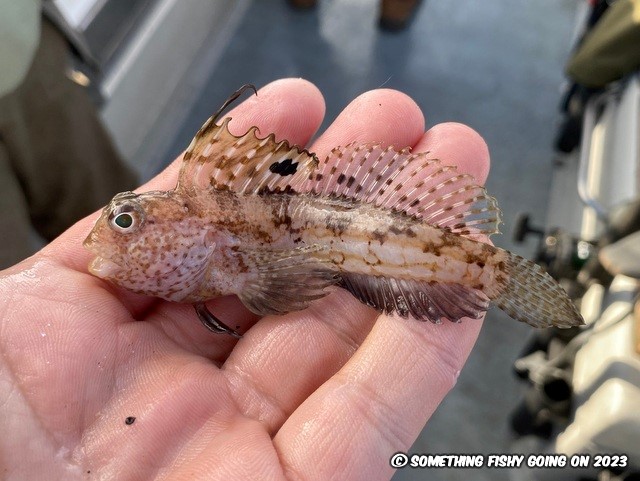
Northern sole.

Dover sole is normally a species I’d associate with the estuary systems of southern England. At least that’s what I used to think. Last year I was told a few of them had been caught in the estuary systems of south west Scotland. Heading down there to try and catch one has obviously been on my to do list ever since, but last Friday evening was the first time I’d actually driven down there to give it a go. My mate Ryan was keen to head down there with me so after picking him up we drove down in the evening and fished the last three hours of the rising tide and the first hour of the ebb. I fished ragworm on a three hook flapper rig, trapping small weights on my snoods using float stops to pin them to the muddy bottom we were fishing over. Sole prefer a stationary bait presentation. Ryan wasn’t interested in catching sole, so he opted to fish two hook flapper and pulley rigs baited with crab and squid to target shark species. For the first hour of the session the current was ripping by in front of us and weed was a major problem, but both eventually began to ease off and this made fishing much more straight forward. Ironically, despite fishing smaller baits on much smaller hooks, I was first to catch a couple of thornback ray. 

I think it was the first time I’ve caught a ray on ragworm. Usually I prefer a frozen launce rapped in squid when targetting rays. 

As light faded, bites started coming fairly steadily and despite a few rather annoying midgies appearing as the wind dropped off, it turned into a very enjoyable session. 

The legs of an old pier next to us may have been rotten but the view certainly was not. 

Every time my rod tip registered some interest I was of course hopeful that it was an elongated brown flatfish greedily munching on my ragworm but every time it was a thornback ray. Meanwhile Ryan had caught a few thornback ray too, as well as some starry smoothhound and lesser spotted dogfish. Eventually, I caught a lesser spotted dogfish of my own, my first of the year. 

I don’t care what the haters say, when they’re not trying to rasp the skin from your arms, dogfish are awesome!
Ryan’s biggest starry smoothhound of the night. 

During the last hour I was tempted to switch out my rig and bait to try to catch a starry smoothhound myself, but I had ragworm left to use up and a new species to add my Scottish tally. As high tide approached the bites slowed right down and weed began to be problematic again. On my last cast my rod tip rattled and lifting into the culprit I knew it was too big to be a Dover sole. 

My last cast produced a nice thornback ray. 
I never grow tired of admiring their eyes. Stunning!

Despite failing to catch my intended target, it had been a good session. A new venue fished and I’m sure with a bit of persistence I’ll eventually get my first Scottish Dover sole. Like I said at the beginning of this post, I know that at least three have been “accidentally” caught at three separate south west Scottish estuary marks by anglers who were targeting other, larger species. I actually think there may be a few of them down there, it’s just that anglers aren’t specifically targeting them or using the required sole specific tactics.

Tight lines, Scott.

Monday, September 25, 2023

Species hunting road trip: Species hunting aboard Flamer IV.

The morning after driving down south I was up early and drove down to Weymouth Marina, parked the car and started organizing my tackle. After meeting up with Jack Perks, the underwater photographer who had organized the boat trip and asked me to take part, as well as some of the other six anglers who Jack had also invited along, I popped around to the Weymouth Angling Centre to get some ragworm. Once back at the boat, we all loaded our gear onboard. We left the pontoon at 07:00, and it didn’t take us long to get to the breakwaters of Portland Harbour, where we'd spend a few hours to begin with.

One of Portland Harbour’s massive breakwaters covered in old military positions. We fished a few different spots around them to start with. 

By the time we'd drifted over a couple of different marks, a few pout and pollock had been caught, as well as all six species of wrasse found in UK waters. Between the eight of us we'd caught Baillon’s, ballan, corkwing, cuckoo, goldsinny and rock cook wrasse! I also managed to catch my first tompot blenny and black seabream of the year. 

Not the blenny I was most looking forward to possibly catching, but very welcome nonetheless!
A few small black seabream interrupted the steady stream of wrasse. I’d really love to catch one of these in Scottish waters. Maybe something I'll attempt next year!

Whilst drifting over the third mark a few black goby were coming up and then the first butterfly blenny of the trip was caught. Quite fitting perhaps that it was caught by Jack, as the trip was after all his idea! I’ll be honest and admit I was pretty jealous, but at the same time I was happy for him, and it was also cool to see one in the flesh. That being said, whilst I was glad someone had caught one, as it confirmed their presence, that didn’t necessarily mean I would catch one too! So, with a sense of renewed optimism, I focused on my fishing, trying to feel any bites as my small piece of ragworm slowly trundled along the bottom. About an hour or so after Jack caught his butterfly blenny, a second one appeared from the depths and was hastily brought onboard the boat. Caught by yours truly! I was absolutely delighted to say the least! My first new UK saltwater species in a while, and a very cool one into the bargain. Blenny do occasionally bite you when being handled, and I've been chomped more than a few times over the years, but even I was slightly surprised by how super aggressive the butterfly blenny was, continually biting my fingers as I tried to take some photos of the small funky fish.

My first ever butterfly blenny! The rather vicious little swine attacked my fingers repeatedly!
I popped it into a bucket of fresh seawater to calm down...

...before lifting it out again for a trophy shot!

We carried on drifting over the butterfly blenny mark for a little bit longer so that the other anglers could continue trying to catch one, and before too long a third was indeed caught. After a while though we decided to turn our attention to targeting red band fish and skipper Colin soon had us in position on a new mark and gave the OK for us to drop our rigs down. Straight away, two of the guys caught one each. These were followed by a couple more shortly afterwards. I didn’t catch one myself but as I’d caught one before I wasn’t too disappointed. I caught my first red band fish almost ten years ago! After a while, no more had been caught, so we then decided to anchor up at a different spot further offshore. 

Colin took us to a spot that produces a lot of rays and other shark species, so some of the guys who had brought heavier tackle aboard dropped bigger baits to try for those. I decided to continue fishing with my Rock Rover and small baits, and this produced a few black seabream. One of the other anglers caught a striped red mullet, a few dogfish were boated and then Jack caught a small tope. After a while, my rod got pulled down by something a little bit bigger that turned out to be a small starry smoothhound! Great fun on my Rock Rover I must say, but more importantly, another addition to this year's species hunt tally.

Happy days. A bonus starry smoothhound on ultra light tackle!

As the tide strength increased, holding the bottom became problematic for those of us fishing with lighter tackle, so we decided to head back to the butterfly blenny mark to have another go for them. The drifts were a lot faster though, and this made staying in contact with the bottom and detecting bites difficult. I let out line as we drifted to try and keep my bait stationary for short periods, to allow any small fish more of an opportunity to grab my bait. This method worked quite well and after catching a few black goby I caught my second, and what would turn out to be the last, butterfly blenny of the day!

We finished up the day drifting over muddy banks targeting red band fish again, and just as had happened the first time we drifted over them, a few red band fish were caught almost straight away. The action slowed up after that, so some of the guys ditched their sabiki rigs and tried fishing lures for bass. They didn't catch any spiky silver fish but were rewarded instead with some other species including a nice tub gurnard on a Fiiish Black Minnow and a red band fish on a Major Craft Jigpara metal.

Ben Bassett's jig caught red band fish. What an awesome capture!

It was soon time to head back in and a great day out had come to an end. Between the eight of us we'd managed to catch twenty one species. A pretty good effort all things considered. Some of the guys had very little experience fishing in saltwater and others had fished exclusively with artificial baits and lures all day as well.

Jack Perks (Far Right) and his motley crew of species hunters.

I really enjoyed the day's fishing, and obviously catching the two butterfly blenny was a real highlight for me. In fact, it'll definitely be one of the highlights of my species hunting escapades this year! It was also great to meet Jack in person for the first time, we've been exchanging emails and WhatsApp messages about fish for years! It was a pleasure to meet and fish with everybody else too and see everyone onboard catching a wide variety of fish. If the opportunity to do a similar trip comes up again in the future, I'd sign up for it in a heart beat! I might even organize one myself next year!

Tight lines, Scott.

Click here for the next part.

Sunday, June 11, 2023

Fishing. Like a boss.

On Monday I headed west to the old crusher pier situated to the south of Creetown with my mate Ian. He’s an accomplished shore angler who fishes matches regularly. He also happens to be my boss, being the retail manager of the Edinburgh Angling Centre, where I work. Our main target species for the trip was starry smoothhound, a species I've never caught from the shore before, but I was also hopeful that I’d get a common eel too. Ian assured me I’d probably get one of those fairly quickly and he was right! A three hook flapper baited with small crab baits soon did the trick. 

I got a small common eel on my third cast!
Rig wrecking slippery swines. I’m not a fan if I’m honest.

I then turned my attention to fishing a big crab bait on a pulley rig at distance for starry smoothhound. Ian also cast out a pulley rig to target them as well, but he decided to also fish a three hook flapper on a second rod closer in with much smaller baits, to try and catch flounder, possibly bass and no doubt more eels.

Ian brought some top quality fresh peeler crab for us to use.

After watching our rod tips for thirty minutes or so we wound in to change our baits. There was a fair amount of weed in the water, but I got my rig in fairly quickly, Ian’s rig however had picked up a substantial amount of it, and he struggled to get it in. Eventually, once he'd dragged a huge mass of weed in to the side of the pier, he lifted it up by hand. As soon as he began removing the weed however he got a bit of a shock in the shape of a bass!

This silver surprise was hidden under a large amount of weed!

Over the next few hours, Ian caught a few flounder and eel on his second rod and spent a fair amount of time removing weed from his rig! I stuck with fishing just the one rod and sat watching it diligently, waiting for something bigger to hopefully take my pungent bait.

Ian winds in more weed. Occasionally there would be a flounder or an eel too!
A horrible messy tangle of eel and weed.

Just after the tide turned and began to ebb, Ian got a cracking bite on his big bait rod and wound in the first starry smoothhound of the trip. He had predicted their arrival at this stage of the tide and with some moving through the area I was hopeful I'd get one too before too long.

Ian showing me who's boss!

About an hour later, Ian caught his second starry smoothound of the session. We fished on for another two hours or so, but as the tidal flow increased it became very difficult to hold the bottom and I admitted defeat, probably a while after I should have. Ian had caught a lot of fish, species hunting like a boss too, catching all four that the mark usually produces. The solitary common eel I'd caught at the start of our session meant it wasn't a complete blank for me, and I'd added another species to this year's tally so that was something positive at least. On the way back we discussed the fact that spent more time driving than we spent fishing. Crazy really, but if I’d have caught a starry smoothhound I guess I wouldn’t have minded! If I return to the area I think I’d probably stay overnight and have a couple of sessions at the old crusher pier and perhaps head round to the Isle of Whithorn to fish over low water to try and catch a tompot blenny. 

Tight lines, Scott.

Tuesday, July 21, 2015

Not feeling ticketty boo.

My mate Martin put me in touch with his fellow Aye Sea Angling Club member Gordon who very kindly invited me along to have a day out on his Warrior 165 named "Ticketty Boo II" on Sunday. It was an early start after working on Saturday night and by the time we had reached the Isle of Whithorn and launched I wasn't feeling too great but was hopeful I'd perk up, was still looking forward to the day's fishing and in particular the chance to catch tope and bull huss. Just outside the harbour we did a drift or two and soon caught a few mackerel to use as bait before dropping the anchor at the first mark. With whole mackerel ledgered down tide the waiting game began but feeling a bit worse my stomach didn't want to wait any longer and I started doing a bit of "chumming" over the side. Oh dear. Before too long Gordon's reel's ratchet started clicking though so I had to compose myself to help him boat what turned out to be a lovely tope. Measuring and tagging quickly done it was time for a quick photo.

Gordon with 34lb of shark.

It was a great start and I was optimistic it might be the first of a few but things were slow after that. Fishing a three up rig baited with ragworm on a second rod only produced a cod, a whiting and a few dogfish and there was no further interest in our mackerel baits so we headed to a second mark. Things were fairly quiet there as well however so we went further north into the much shallower waters of Wigtown Bay. Sitting in about 10ft of water I didn't bother with a bigger bait but after catching a few flounder Gordon hooked a fish on half a mackerel fillet which he thought was a starry smoothhound. Once on the surface however we were surprised to see it was in fact a small tope so I quickly put out a half mackerel fillet too. The action was pretty steady after that with Gordon boating a couple more small tope, a couple of thornback rays and a starry smoothhound. I had a small tope throw the hook at the side of the boat before landing one.

My first tope from Scottish waters after several attempts afloat in the Irish Sea and Luce Bay. A small one but I didn't care as it was still another species added to this years tally so I was quite happy.
Sharks are pretty cool fish.

As the tide slackened off things went quiet again apart from a few more dogfish and not long after that it was time to head back to port. To be honest I was glad to get my feet on dry land again and I felt better almost straight away. Sea sickness is pretty horrible but fortunately it's not something I often suffer from. A lack of sleep seems to be the thing that triggers it for me so I'm going to get some travel sickness pills for my tackle box. Depsite feeling ill most of the day it was nice to meet up and fish with Gordon and I hope we can do it again in the future.

Tight lines, Scott.

Thursday, June 25, 2015

Back on track.

After talking about it a few times last year but failing to actually organise it, my mate Martin and I headed down to Drummore on Sunday armed with some crab to spend a day out in local skipper Spike's boat "Go West" targeting starry smoothhounds. As well as fishing with Martin again, which I always enjoy, it was a great opportunity for me to add a few species to my fifty saltwater species from around Scotland challenge tally.

I think Spike's boat should be called "Go South West".  It's all relative though I suppose. 

Gear loaded aboard we were soon drifting over a drop off not far from the shore to catch some fresh mackerel for bait. There were plenty of small ones around a small bait box soon had enough in it to keep us going for most of the day and off we went to drop anchor. Both of us fished two rods, one with a ledgered half mackerel bait for larger sharks like tope, bull huss and thornback rays and a second for smoothhounds and other smaller species. Martin's half mackerel bait must have landed right next to a thornback ray as it took the bait almost as soon as it hit the bottom. After putting that back and casting out a fresh bait he fished a one up one down rig on his second rod with both hooks baited with crab to try and tempt a starry smoothhound. I went with a three up rig and baited my hooks with mackerel strips to try and catch some gurnards. Inevitably we both caught a few lesser spotted dogfish before we eventually caught what we were targeting.

My first dogfish of the year gets a kiss. 
A nice smoothhound eventually beat the dogfish to Martin's crab baits. 
I added a second species to this year's tally with a grey gurnard in nice condition. 

We both caught a few more dogfish and after a few more grey gurnard I switched to a crab bait on a running ledger which eventually saw me catch my first ever starry smoothhound.

My first new species of the trip. 

A few more dogfish later Martin and I both landed a couple of nice sharks at the same time.

A nice thornback ray for me, a fourth species added to this year's tally and yet another smoothhound for Martin. 

Shortly afterwards I caught a smaller ray. When it came into view though I could tell from its markings that it wasn't a thornback and got a bit excited. Quickly lifting it into the boat my suspicions were confirmed and I had struck lucky with a spotted ray. 

Quite a rare capture. Spike told us he'd only ever seen two or three boated. I was extremely happy to catch my second new species of the trip and add a fifth to this year's tally. 

With no tope or bull huss showing interest in our bigger baits we upped anchor and tried a few drifts fishing with smaller hooks to see what else might turn up. This saw us catching some whiting and a few more mackerel. Dropping anchor at a second mark didn't  see anything else being caught except a succession of whiting and dogfish. Slightly disappointed not to catch any tope or bull huss it had still been a good day and when we got back< to Drummore we discovered that none of the other boats had caught any tope either. After loading up our cars and saying goodbye to Martin he headed up the road but I headed north to Stranraer where I'd be staying the next two nights. I had Monday and Tuesday off of work and my species hunting in Dumfries & Galloway wasn't over just yet.

Tight lines, Scott.

Thursday, December 18, 2014

Most Wanted : Starry Smoothhound.

I did intend to head down the South West coast of Scotland and have a go at catching this species of shark from the shore this year with my mate Martin but we just never got round to it unfortunately.

Starry smoothhounds come inshore to feed mainly on crabs which is normally the bait anglers targeting them opt to use.

The starry smoothhound is virtually identical to its cousin the common smoothhound except the common smoothhound lacks the "starry" markings on its back. These are variable however and some starry smoothhounds lack these which poses an identification problem because there is no reliable method of distinguishing between the two species in live specimens apart from these white spots.

Spots the difference? Starry top and common bottom (or is it?).

The distribution of both however means that virtually all of the smoothhounds caught in UK waters are almost certainly the starry variety. A good illustration of the very low probability of coming into contact with common smoothhounds is the findings of a recent study into smoothhounds in the North East Atlantic. Over four hundred smoothhounds from around the UK were examined by survey scientists. Initially the sharks were all identified visually with the majority thought to be starry smoothhounds and only ten percent thought to be common smoothhounds. When their DNA was tested however it turned out that every single one of them was in fact a starry smouthhound. Presumably the misidentifications were due to a lack of dorsal spots and if marine biologists can get it wrong what chance has your average angler got?!

Interesting identification issues, species distributions and scientific studies aside, next year I will definitely be heading down to the South West coast of Scotland to have a go for them. I'm not sure if I'll try from the shore or go out in local skipper Spike's boat. Targeting them from afloat offers an opportunity to use lighter tackle and as they are renowned as one of the hardest fighting shark species perhaps this would be a more enjoyable approach to take. Hopefully Martin or some of my other fishing mates will be able to join me.

Tight lines, Scott.