Wednesday, November 23, 2022

Not going up there again!

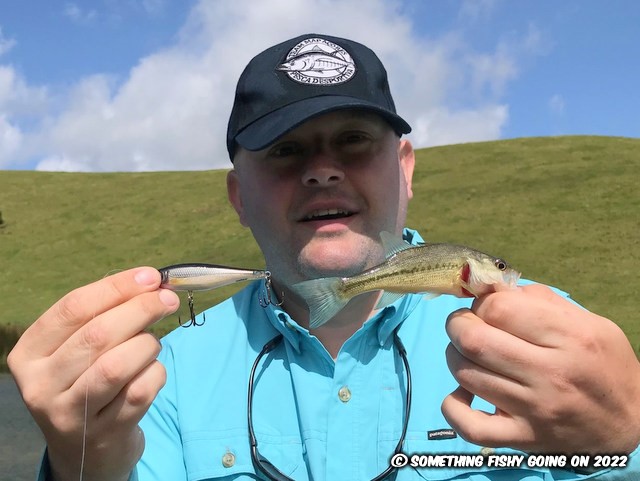
Following my failure to catch a "wild" brook trout, I wasn't too keen on repeating the hellish climb up to the remote highland loch again in a hurry. Luckily, Drumtassie Trout Fishery in West Lothian have stocked some aggressive brook trout into their fly fishing ponds, so I headed there at the end of July to strip some lures in an attempt to catch one. Nowhere near as dramatic or romantic as climbing up to a remote hill loch to catch a wild one, but needs must. Within the first hour of the session, my yellow dancer lure had been taken by a couple of rainbow trout before I got lucky and managed to catch my target.

Easy enough and more importantly only a short walk from the car.

I'm not very good at casting a fly line and if I'm honest, fly fishing at commercial venues is also probably my least favourite way to fish. That said, I spent the rest of the day trying to catch my first ever golden trout. They seemed more difficult to catch than standard rainbow trout, of which they are a genetic variation. I think being so visible, they've had every fly conceivable put in front of their faces and are a bit more cautious in their meal choices as a result. With plenty of golden trout stocked into the fishery's ponds, I resigned myself to the fact that I'd have to keep returning until I eventually got my first golden trout.

Tight lines, Scott.

Monday, November 21, 2022

Out of character.

When you decide to go out and try to catch something new, it often pays to do some research. Know your quarry. Proper preparation and all that. So, earlier this year, I set about learning everything I could about the humble stone loach. A small bottom feeding nocturnal fish that lives in rocky, fast flowing rivers and streams, that hides during the day, coming out after dark to hunt using three pairs of barbules around its under slung mouth. Over the years, I've occasionally found that scientific papers can be a treasure trove of information. In one that a Google search threw up, I discovered a set of electro fishing survey results that gave me a few locations where very health populations of stone loach were found. Armed with this info, I set off to fish Ecclesmachan Burn in West Lothian, the stream where the researchers had found the highest concentration of my target. I fished with pinkies and tried a couple of different presentations, small floats in slower moving water and a running ledger on the bottom where the current was stronger. Several sessions over the early summer months produced a surprising amount of little fish, but not my intended target, sadly.

Three spined sticklebacks made a large percentage of my catch, including some males in their vibrant breeding colouration.

I also caught plenty of minnows as well.

A tiny bit disheartened by my lack of success in West Lothian, I decided to try a little closer to home and had a few evening sessions on the Water of Leith. This produced even more minnows, three spined sticklebacks, as well as a few brown trout and also a few bullheads after dark.

A nice Water of Leith brown trout. Great fun on my ultra light rod.
Not the correct nocturnal fish, but it was fun to catch a few of them all the same.

By this point I needed a break from creeping about after dark trying to catch a stone loach, so I drove to north to a remote highland hill loch with my mate Nick. It perhaps wasn't the best plan to undertake the trip on what would turn out to be the hottest day ever recorded in the UK, but the loch in question has a resident population of brook trout, which happened to be the next target on my list. To say the climb up was pretty brutal would be a huge understatement, but we had a few stops and, luckily for us, shortly after we got up to the loch a few clouds rolled over to provide some respite from the summer sun. It even rained lightly a few times, which also helped cool us down.  

Are we almost there yet?
The sun beating down as our walk up the hillside continued.
Just before reaching the loch, we came to a massive stone, a huge lump of rock that has fallen away from the cliff behind it.
Finally, we reached the small remote loch. The water was crystal clear and I wondered if the fishing would be difficult as a result.

The hike up may have been tough, but the fishing was even tougher. So tough in fact that I caught the only fish of the entire day about half an hour before we were planning on packing up. It wasn't even what we'd hiked all the way up there to catch. No, sadly it wasn't a brook trout. Incredibly, I'd managed to catch my first ever stone loach! Not in fast flowing water, in a hill loch. Not after dark, in the bright sunlight of the hottest day ever recorded in the UK! Not on a bait presented on the bottom, on a maggot fished a foot off the bottom! Just goes to show that sometimes in fishing, a huge slice of luck is all you require! Needless to say, I couldn't believe it and was grinning all the way back down the glen!

My first ever stone loach! What a cool little fish! What a stroke of luck!

One step closer to my goal, I was still keen to catch my first brook trout, but I wasn't sure if I wanted to repeat the hike up to the hill loch again in a great hurry. A bit of research into alternative potential brook trout venues that didn't involve a four-hour hike was definitely in order!

Tight lines, Scott.

Sunday, November 20, 2022

Golden warrior.

In June, I turned my attention to catching my first Scottish crucian. After doing a bit of research, I identified two venues that I was confident had some true crucian in them. The first being Loch Dunmore situated in Faskally Forest near Pitlochry and the second Greenhill Fishery near Dalbeattie in Dumfries & Galloway. The first venue is a member's only water, so I joined Dunmore Angling Club and drove up there to have a go. Loch Dunmore is a very picturesque water, it has many large reed and lily beds and lots of pond weed in it too, which I thought might be problematic in terms of locating a swim. When I arrived the first time, I had a walk all the way around the loch to check out the various angling platforms before deciding on one at the northern end of the water opposite the old boat house. It was fairly deep, had a large fishable gap in the aquatic flora and proved to be a good choice as it produced some nice fish. I fished three separate sessions from it over the next month or so, using a very sensitive float and a small piece of corn or single maggot on the hook.

The loch's old boathouse.
The biggest roach that I caught.
The loch has a large head of perch too. Maggot didn't even get to the bottom when a shoal moved into my swim.
The venue has been stocked with tench and I caught a lot of those too over the three sessions, mainly on small corn hook baits.

I then decided to pay Greenhill Fishery a visit, so I spoke to the owner before travelling down. He told me that the crucian had been stocked in 2013, and that it had been a few years since he'd heard of anyone catching one. He also told me that most anglers fishing the coarse pond were targeting the carp and tench on mostly method feeder tactics and would be unlikely to catch any crucian still in there. I decided to go and try my luck with tackle more suited to the shy biting fish. The day ticket Lily Pad Pool turned out to be a lovely little venue, only three-quarters of an acre in size and tucked away in a valley. After a quick walk round and listening to a bit more advice from the owner, I opted to fish a peg that had a nice bed of lily pads in the margin just to the left of it. A sensitive float rig was lowered in just out past them and I soon started catching some cracking tench on small pieces of corn that were great fun on my light float rod.

All the fish were in lovely condition.

Over the next month or so I made four trips down there and also did some feeder fishing as well for the resident carp, which I caught a few of over the sessions. The biggest one however was caught on my light float rod, which resulted in quite a lengthy battle. I had to take my time playing the fish, as applying any kind of pressure would no doubt have resulted in it breaking me off. Great sport though!

Patience was key in landing this lovely double figure common carp. It took a single maggot on a #18 hook tied to 2lb nylon!

About two hours into my fourth session, my Drennan No.1 glow tip antenna float slowly slipped under, I gently lifted into the bite and hooked the culprit. It didn't fight terribly hard and came to the surface reasonably quickly. When I got sight of what it was, I started screaming to my mate Ryan, who had joined me for the session, "Get the net! Get the net!". After a brief nervous moment, when the fish thrashed on the surface as it came towards the net, my first Scottish crucian was drawn over it.

Jackpot! A bit of an old warrior, missing a few scales, but still a beautiful fish nonetheless.

I was absolutely buzzing. It's incredibly satisfying when you set out to catch and then get a tricky target species. Especially one as elusive as a Scottish crucian! By this point, I'd already formulated a plan to get me to my goal of one hundred Scottish species. Having moved one closer, I was ready to shift my focus to a small bottom feeding fish that lives in rocky streams and only comes out to feed after dark, the stone loach.

Tight lines, Scott.

Friday, November 18, 2022

My nemesis.

After returning from The Azores, and with renewed enthusiasm towards attempting to reach the target of catching one hundred Scottish species following my Connemara clingfish capture just before I went, I headed to the west coast to try yet again to catch my first ever Scottish three bearded rockling. This species has been my Scottish species nemesis of sorts for quite some time. I've tried to catch one numerous times and failed on each and every occasion.

Here's one I caught earlier. South of the border, in Ilfracombe, Devon.

My mate Ryan joined me as he wanted to try and catch his first ever conger eel, a species often found in the same rough ground as my pink and brown arch enemy. Due to the distance involved, we decided to make a full day of it. We set off reasonably early, arriving at Kelly’s Pier on the shore of Loch Etive late in the morning. We had a few hours fishing there using ultra light tackle, and it was all quite fun. Using small hooks we both caught a few small fish around the base of the pier in the shape of painted gobies, two spotted gobies, long spined sea scorpions, three spined sticklebacks, some small sea trout. After a bit of patience, and scavenging some fresh bait, I also caught a fifteen spined stickleback.

One of several three spined sticklebacks that were caught. Tanago hooks once again proving to be a great weapon in my micro species hunting arsenal. 
A small straight lure twitched slowly and gently fooled this sea trout. There were a few around, probably predating the three spined sticklebacks.
I find fifteen spined sticklebacks are quite difficult to catch, even when sight fishing for them. This is only my second ever. They are quite fussy eaters, I think. This one wasn't interested in tiny pieces of raw prawn lowered in front of it. It took a tiny piece of a ragworm that I found under a rock near the pier.

In the evening, after stopping in Oban to check into the hostel we were staying in that night and grabbing some food, we headed south to our mark for the evening on the island of Seil. After making our way around a rocky outcrop to get to our spot, we got comfortable and set up our rods. Simple running ledger tactics were employed but as Ryan was after a conger eel, his terminal tackle and mackerel bait were considerably heavier and bigger than mine! We waited patiently for darkness to fall and for our rod tips to register some interest in our fish baits.

The sun set over Mull in spectacular fashion. Red sky at night, anglers delight?

Unfortunately, the fishing was very poor. Nothing was tempted by Ryan's mackerel flapper and all I caught was a single pollock and a small spurdog. In the early hours of the morning, after a couple of hours with no further bites, we admitted defeat and scrambled back around the bottom of the cliffs to the car park before making the drive back up to Oban to get some sleep.

The next day we headed north and fished at a couple of marks that are normally very productive, particularly for catching a variety of mini species, but quite incredibly neither of us caught anything. We didn't even get any bites! Feeling rather dejected and a little perplexed as to why the fishing had been so dreadful, we called it a day and drove home. Fishing can be tough sometimes, and yet again a three bearded rockling session had seen my rough ground nemesis evade capture once again. I’ll get one from a Scottish venue eventually!

Tight lines, Scott.

Tuesday, November 15, 2022

Species Hunting adventures on São Miguel: Part 2.

On day four of our trip Lee and Ross arrived. Lillian and I picked them up from the airport early in the evening and we headed back to the apartment. After they unpacked we all had a meal together and caught up a bit. Our friendship is one of those we just pick up where we left off and it really didn't feel like we hadn't seen each other for over two years! The lads were keen to do some fishing, so we headed out for a couple of hours after dark. We drove along the south coast to the harbour in Vila Franca do Campo, the most productive spot I'd fished so far. Surprisingly, the session was pretty slow, but we all persevered and caught a few small white seabream and some bastard grunt. Lee did hook into something big that stayed deep and started stripping line before heading under a large fishing boat and snapping him off. We could only guess what it was. I also caught a small fish that I initially thought was an Atlantic horse mackerel. It looked a little different though so I kept it so I could examine it further back at the apartment.

A bit of googling when we got back helped me confirm I'd caught my first blue jack mackerel. My forth new species of the trip. We'd see them for sale in the fishmongers the next morning, locally they are called Chicharros.

Apparently they're called bastard grunt from the Dutch word "bastaard" which means "hybrid". At one point biologists incorrectly believed they were not a species in their own right but a mixture of two others.

We headed back to Vila Franca do Campo harbour the next day so that Ross could catch a black faced blenny. I gave him a tanago hook to use and it didn't take him long to catch several, including some females. It was quite a productive session, although I'd caught most of the species already earlier in the trip. 

After a while we went for a drive around the western end of the island. Stopping off at a small pier in Mosteiros, where we caught endless wrasse from the fairly shallow rocky ground around it. This soon became a bit repetitive, so we jumped in the car again and drove east along the north coast to check out Rabo de Peixe harbour. After a quick walk around we decided to fish from a concrete plarform on the right hand side of its entrance. The water here was pretty deep but all we caught was endless wrasse again and the odd Guinean puffer. 

Keen to catch something else I suggested we head back to Ponta Delgada, to fish the slipway behind the fish restaurant. It turned out to be a good decision. Freelining bread and chunks of raw prawn produced plenty of thick lipped mullet, a few salema, the odd specimen rockpool blenny and you can probably guess what else, wrasse! The average size of the fish was a bit bigger though, some of them even bent our rods a little.

Unlike my failed attempts in Crete last year, I actually managed to land a few salema. They're  quite an attractive fish with those bright yellow stripes along their flanks. They're also supposed to be hallucinogenic if eaten. Never tried one myself to confirm this.

Lee and Ross both caught this specimen male blue wrasse within ten minutes of each other. We realised it was the same fish they'd both caught when we looked at their photos later on and noticed the slightly damaged top edge of its tail fin.

That evening after dinner Lee, Ross and I headed down to Praia das Milicias to ledger sardines for stingray with our heavy gear. While we waited for the sun to set I spent half an hour fishing in the surf with my trusty HTO Rock Rover and a piece of Angleworm on a drop shot rig. I only caught three lesser weever, but was happy enough as it was yet another species added to my tally. By the end of the session it also meant I was the only one of us who didn't blank on the beach that night as we had no joy catching anything on the heavy gear at all sadly.

Some fish can adapt their colouration to match their environment so they blend in. Black volcanic sand means a dark fish is harder for a predator to spot. Not sure what fish eats weever mind you as they live under the sand most of the time and are armed with several poisonous spines!

The following day, after popping into town and sorting out freshwater fishing licenses, we drove west to Sete Cidades. It's a small village located in the heart of the crater of an old volcano that also contains several bodies of water. After a nice walk around the side of the main lake we decided to fish from the bridge that crosses it. There were a few carp swimming around but we turned our attention instead to catching some perch on soft plastics. The resident pike had other ideas however and Lee caught two nice ones on his ultra light gear. Ross and I did catch a few small perch and I also caught a roach on a small piece of freelined bread.

Lagoa Verde and Lagoa Azul make up the largest body of water separated by a stone bridge.
The three amigos fishing away.
One of Lee's pike. Great sport on his ultra light rod and almost got under the bridge.
I was quite chuffed to catch this roach. My first one on freelined bread.

The following morning myself, Lee and Ross got up early and drove up to Porto Formoso harbour where I had booked us a four hour boat fishing trip with North Shore Sea Tours. We started off trolling for pelagic species but had no joy with those so we switched to fishing with jigs on the drift. Pretty quickly I caught a nice blacktailed comber close to the bottom. We also caught a few chub mackerel, blue jack mackerel and bonito higher up in the water column. It wasn't that rough, but despite taking some travel sickness pills in the morning just in case, my sea legs failed me, so I was quite glad when we headed back to dry land again. On the way back to port we spotted an angler fishing from a rock mark that looked pretty good so I marked the location on my phone.

The biggest blacktail comber I've ever caught.

Back at the apartment the lads had an afternoon nap and Lillian and I went down to the coast for a walk along Praia das Milicias, then carried on further along to Praia de São Roque. This spot looked like a potentially good stingray mark. The rocks to the right of it had deeper water in front of them and any large fish hooked could be landed over on the beach. When we got back I told Lee and Ross about the spot and later that evening we dropped the lads off there. Lillian and I went away and had dinner together and then met up with them again afterwards. Just after we arrived Lee caught a small stingray, which was the only one caught of the session.

Lee's stingray turned out to be the only one of the trip.

The following day in the afternoon we headed to the north coast again. This time we headed to Maia where we parked the car. Following the clifftop coastal path west, we then found steps leading down to the rocks where I'd marked the fishing spot the previous day. It turned out to be a great little session and the area was lovely too.

The view westward from the clifftop path was stunning.
The paths were lined with beautiful flowers.
Fenced paths and steps leading down to the sea made accessing the rocks down below very straight forward.
In no time at all the three of us were freelining chunks of raw prawn with a bit of split shot on the line to counter the wind and swell. 
It proved very effective and we had a lot of fun catching several of these hard fighting white seabream.
Ross caught the biggest one of the session.

Heading back to the car we decided to try our luck in freshwater again and drove south from Maia to Lagoa de São Brás, where we would try to catch some largemouth bass. The fishing was tough but eventually we caught a few small specimens.

Eyes bigger than its stomach.

In the evening we headed out locally and fished inside Ponta Delgada's huge harbour. Spotted rockling were the target species but we had no joy catching one. Instead we all managed to catch at least one greater forkbeard each, a new species for all of us and my fifth of the trip.

The greater forkbeard has elongated pelvic fins and a single barbule on its chin. It is the cousin of the tadpole fish, which is also known as the lesser forkbeard.

The next day we headed north yet again to the rocky shoreline to the east of Rabo de Peixe harbour where we spent an hour or so hunting in rockpools for spotted rockling. A few small crabs were found and used for bait on a split shot rig that was lowered into dark holes and in front of potential hiding places. A few dozen rockpool blennies later, we decided that trying to catch rockling during the day was a futile exercise and headed back to the south coast to fish the harbour in Villa Franca de Campo again. We tried a different area but the fishing was incredibly slow. I did catch my sixth new species of the trip though so that was a unexpected bonus.

A small red seabream. Also known as the blackspot seabream due to the small dark mark at the start of its lateral line.

The following day was our last together. Lillian and I were leaving a day before Lee and Ross and had to be at the airport in the afternoon. As we didn't have long before heading off we spent an hour or two fishing in the morning. Fishing in between the fishing boats in the working part of Ponta Delgada's harbour, the fishing was pretty poor sadly, but one species in particular was actively feeding. It was one I hadn't caught yet so I added one last species to my tally, taking my total to thirty one, before it started to rain and we headed back to the apartment.

We caught dozens of black gobies. My last fish of the trip was one.

Soon afterwards Lee and Ross dropped us off at the airport and we said our goodbyes. Lillian and I flew to Lisbon where we stayed for four nights before returning home to Edinburgh. Given the amount of fishing I was allowed to do on São Miguel I thought it might be a good idea if I didn't push my luck on that front whilst we were in the Portuguese capital, so there will be no species hunting adventures in Lisbon catch report to follow.

Anyway, despite the fishing being hit and miss, I was happy with my tally for the ten days and about catching a few new species too. Here's what I caught with new species in bold.

  1. Atlantic Chub Mackerel
  2. Axillary Seabream
  3. Ballan Wrasse
  4. Bastard Grunt
  5. Black Faced Blenny
  6. Black Goby
  7. Blacktail Comber
  8. Blacktail Rainbow Wrasse*
  9. Blue Jack Mackerel
  10. Blue Wrasse
  11. Bogue
  12. Common Two Banded Seabream
  13. Damselfish
  14. Derbio
  15. Emerald Wrasse
  16. Greater Forkbeard
  17. Guinean Puffer
  18. Largemouth Bass
  19. Lesser Weever
  20. Montagu’s Blenny
  21. Ornate Wrasse
  22. Parrotfish
  23. Perch
  24. Red Seabream/Blackspot Seabream
  25. Roach
  26. Rock Goby
  27. Rockpool Blenny
  28. Salema
  29. Striped Red Mullet
  30. Thick Lipped Mullet
  31. White Seabream

*Unknowingly I'd already caught this species on previous trips to Madeira so not truly a new one.

Lillian and I really enjoyed São Miguel and we'd like to return to the Azores again, perhaps to explore some of the other islands there. I think a visit late in the summer might be better in terms of the weather and the fishing might be better then too, with some pelagic species coming in shore that time of year. It was great to catch up with and also to catch a few fish with Lee and Ross again. It always is, and on that subject, we all agreed that two years without a fishing holiday together was way too long, and we will be fishing abroad together at some point in 2023 hopefully. We haven't decided where yet but all agreed we need to do something special next time. I can't wait!

Tight lines, Scott.