After consuming a bit too much alcohol celebrating my epic light game bonito the night before we had a late start on the fifth day of our holiday. We decided to try a new mark and headed north to Costa Teguise where we found a small breakwater to fish from the end of. It had a large rusty sculpture at the end so we fished from the shade it provided. It was a fairly shallow spot with a sandy bottom so I was confident we might add a new species or two to our tally but it only seemed to hold one species, puffers. The amount we caught was quite frankly ridiculous and with not much else biting further out we decided to try fishing in very close amongst the boulders. Unsurprisingly this produced a few ornate wrasse and Canary damselfish but eventually we caught an emerald wrasse each as well.
 |
| A welcome change from pesky puffers! |
I then spotted a red lipped blenny on a submerged rock but, as they usually do, it turned its nose up at my piece of angleworm. After a while I gave up pestering it and began dropping a split shot rig down deep dark cracks between the rocks. After a while my rig got snagged, or so I thought. Pulling it free it came up with a crab's claw on the hook so I used a rock to break it open and put the meat from inside onto my hook. Dropping this down into a big hole saw me catching a few ornate wrasse and then I caught something different which had me rather excited! My third new species of the trip and my first ever hairy blenny.
 |
| This one is a female. The males have a bright red head. |
After I caught a second female hairy blenny, Nick had caught a solitary derbio and we got fed up of the puffers we decided to break for some lunch. Tasty tapas were enjoyed along with refreshing cold drinks but as it was the middle of the day rather than go fishing again we jumped back in the car and headed to Arrecife to do some Pokemon hunting from the comfort of our air conditioned hire car. As I did a tour of the city Nick scanned the area for his target. I think we were on maybe our third or forth lap when Nick suddenly shouted "STOP THE CAR!". Before I even had a chance to put the hazard lights on he was out of the car and heading off back the way we had just come. I don't know much about Pokemon but I could tell by his expression as I watching him jog back to the car in the passenger door mirror that he had caught it.
 |
| Corsola, the tropic region specific Pokemon Nick's son had asked him to catch. |
Whilst driving around Pokemon hunting we had spotted some locals fishing so we decided to go back to where they were to see what they were fishing for. It turned out they were targeting mullet, using the usual crude method of a string of hooks in half a baguette so we decided to spend an hour or so fishing for them too. There were lots around so using a loaf of bread we had in the boot of the car and a little bit more finesse in our approach than the locals we had soon caught two types free lining small pieces of flake.
 |
| Most of the mullet were the thick lipped variety... |
 |
| ...with the odd golden grey in amongst them. |
After we'd caught about a dozen mullet Nick sat under a tree to get out of the sun while I fished on for a bit. We'd seen some big bass coming up to inspect the mullet we'd managed to hook as they thrashed around and I was keen to try and catch one. I tried fishing small paddletails but I didn't have any luck and when I returned to Nick he said he'd found the location of a nearby health centre and wanted to have the burns on his ankle looked at. A wise decision I thought so off we went. I thought we'd be there for a while but after producing his European Health Insurance Card and filling in a form Nick's burn was cleaned up and dressed after a wait of about only twenty minutes. Very impressed by the service provided we headed back to Puerta del Carmen for a break.
In the evening after something to eat we popped down to the small pier to the right of Playa Chica where we caught a few nice fish. I caught a few cleaver wrasse and Nick caught a few wide eyed flounder. Nick then hooked a nice fish that stayed deep and gave his drag a workout. Once he had played it out I went down onto the rocks at the end of the pier to land it for him. I recognised it as a drum but had to do some research back at the apartment later on to identify it as a shi drum.
 |
| A nice fish for Nick that gave a good account of itself. |
As it got dark it started to rain and whist this was quite pleasantly cooling, with its arrival the action died off completely so we decided to have an early night with the intention of an early start the next morning.
Up before sunrise as planned we stayed local and headed along the back of Puerto del Carmen's harbour with our lure gear to try for bigger fish. We thrashed the water with various lures for about two hours with no reward. We did see another angler in a group along from us on the rocks catch a small bonito but apart from that nobody else caught anything. Later in the day, after Nick had visited the local health centre to have his dressing changed, we went up to Arrecife and headed out to the end of the long breakwater we'd fished from earlier in the trip. Keen to add more species to our tally we decided to fish small baits on our ultra light tackle. This approach saw us catching plenty of fish including our first combers of the trip.
 |
| Most combers were the common variety... |
 |
| ...but we both caught a single painted comber each too. |
After a while we switched to our lure setups and began fishing a variety of lures to see if there were any larger predators around. Predictably this resulted in fairly large lizardfish attacking our jigs and paddletails.
 |
| This big atlantic lizardfish took a brightly coloured Savage Gear Sandeel fitted with a stinger. |
Whilst I was reeling in a lizardfish that had taken a jig I spotted a large barracuda following it. At over a meter in length it was the biggest barracuda I've ever seen and I thought it was going to grab the hooked fish but as it got closer it lost interest, turned away and disappeared with a powerful burst of speed. It was quite exciting just seeing it. We carried on fishing for a while but when the Port Police pulled up and politely informed us and some locals who were fishing nearby that fishing wasn't permitted where we were, we apologised, quickly packed up and left, deciding just to call it a night and have a drink back at the apartment.
Our last full day had arrived and we were still keen to add a few more species to our tally. Having a think about what I'd caught the last time I visited the island but hadn't caught this time we formulated a plan and headed to the back of Puerto del Carmen harbour to a spot I though might produce a planehead filefish. After a few dozen puffers and ornate wrasse I managed to catch a few of them.
 |
| The planhead filefish is a rather funky fish. |
After a while things slowed down and the all that was biting was puffers so we walked along the coast to the small pier to the right of Playa Chica again. Things were pretty quiet in the open sea there too so we turned our attention to some nearby rockpools where we had a bit of fun sight fishing for the super aggressive gobies and blennies.
 |
| There were dozens of these Madeira gobies on the bottom of the rockpools in plain sight. |
 |
| The rockpool blennies were a little more timid but soon darted out of their hiding places when a piece of irresistible angleworm was dangled in their vicinity. |
There's only so much fun you can have pestering gobies and blennies so we decided to try a new spot off of the rocks at the opposite side of the beach.
 |
| We hoped that this spot might produce something new. |
It was relatively shallow and sandy area and with the wind at our backs we were able to cover a lot of water. Plenty of fish were biting and we soon caught a few greater weevers, lizardfish and this poor wide eyed flounder that a large lizardfish assaulted and swallowed as I reeled it in. The poor flatfish got regurgitated as I lifted its assailant out of the water.
 |
| Lizardfish snack. |
The last fish of the session, or should I say the fish that ended the
session, was a greater weever which, despite me carefully attempting to
shake it off the hook without touching it, managed to flip itself up and sting
my thumb, drawing blood. A tingling sensation soon became a gradually intensifying painful throbbing so we quickly packed up and headed off so I could seek treatment. Luckily we were near a restaurant that offered me first aid in the form of several cups of very hot water that I spent fifteen minutes holding my thumb in. Afterwards my thumb was rather numb but the sharp pain had gone so we headed back to the apartment for some (purely medicinal) alcoholic beverages.
The next day was our final on the island and as we had to be at the airport later that morning we didn't do any fishing. After packing up our stuff and checking out we had a couple of hours to kill so we went for a drive trough the volcanic landscapes of the island's Timanfaya National Park and then stopped off at the César Manrique Foundation on our way to the airport.
 |
| Examples of César Manrique's work can be found all over Lanzarote. This colourful metal sculpture is animated by the wind. |
 |
| This piece of César Manrique art was obviously inspired by the islands volcanic origins. |
 |
| Manrique believed in the harmony of man and nature. A great example of his philosophy is this window in his home. It looks like the lava has poured in from outside through the glass. |
Seeing a bit of the island's strange volcanic landscape and taking in a bit of culture was a nice relaxing way to end the trip and bring our adventure on Lanzarote to a close. I love that part of the world and leaving is always tinged with a little sadness but I'll be back soon for sure.
 |
| Farewell again Lanzarote. |
It had been an fantastic trip and our species hunting had been a great success. Between us we caught thirty seven different species.
Here's a summary of what I caught, new species are in bold...
- Annular Seabream
- Atlantic Bonito
- Atlantic Lizardfish
- Axillary Seabream
- Azores Chromis
- Bass
- Bermuda Sea Chub
- Bogue
- Canary Damselfish
- Cardinalfish
- Cleaver Wrasse/Pearly Razorfish
- Common Comber
- Common Pandora
- Common Two Banded Seabream
- Couch's Seabream
- Diamond Lizardfish
- Emerald Wrasse
- Gilthead Seabream
- Golden Grey Mullet
- Greater Weever
- Guinean Puffer
- Hairy Blenny
- Macronesian Sharpmose Puffer
- Madeira Goby
- Madeira Rockfish
- Ornate Wrasse
- Painted Comber
- Planehead Filefish
- Rockpool Blenny
- Saddled Seabream
- Striped Seabream
- Thick Lipped Mullet
- Wide Eyed Flounder
...here are the species Nick caught that I didn't...
- Derbio
- Shi Drum
- White Seabream
...and I have to include the pesky Pokemon. A fair amount of time driving around Arrecife and a lot of money on mobile data were spent hunting for it.
- Corsola
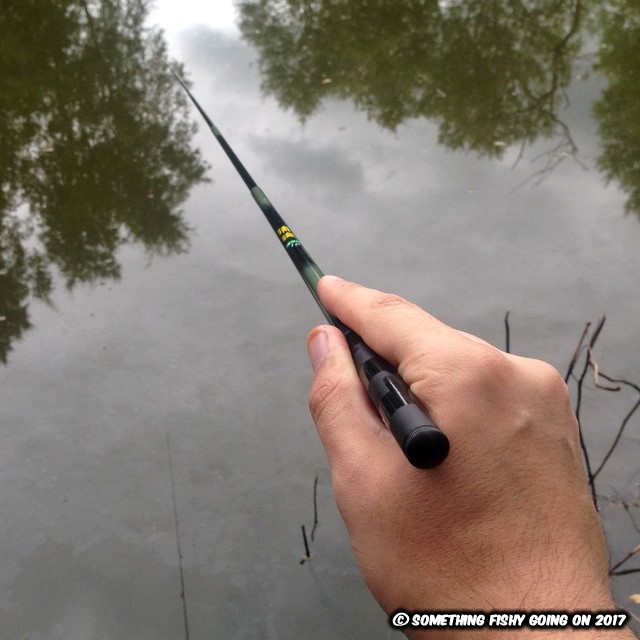
Overall we had a great time and obviously the highlight of the week for me was catching my first Atlantic bonito. On light game tackle it was an unforgettable, awesome experience that will really take some beating. Since returning my Rock Rover has been re-branded.
 |
| Cracking rod. |
The trip wasn't without it's mishaps. Nick's sunburnt ankle and me being stung by a weever being the main two. These painful accidents are memorable all the same and memories is what it's all about at the end of the day. One thing we didn't do was take the ferry over to Lanzarote's northerly neighbour, La Graciosa. Maybe during a future visit to Lanzarote I'll make it over or perhaps La Graciosa warrants spending an entire holiday. Hmmm. There's a thought.
Tight lines, Scott.